Setenil de las Bodegas: The Surreal Spanish Town Built Beneath Giant Rocks
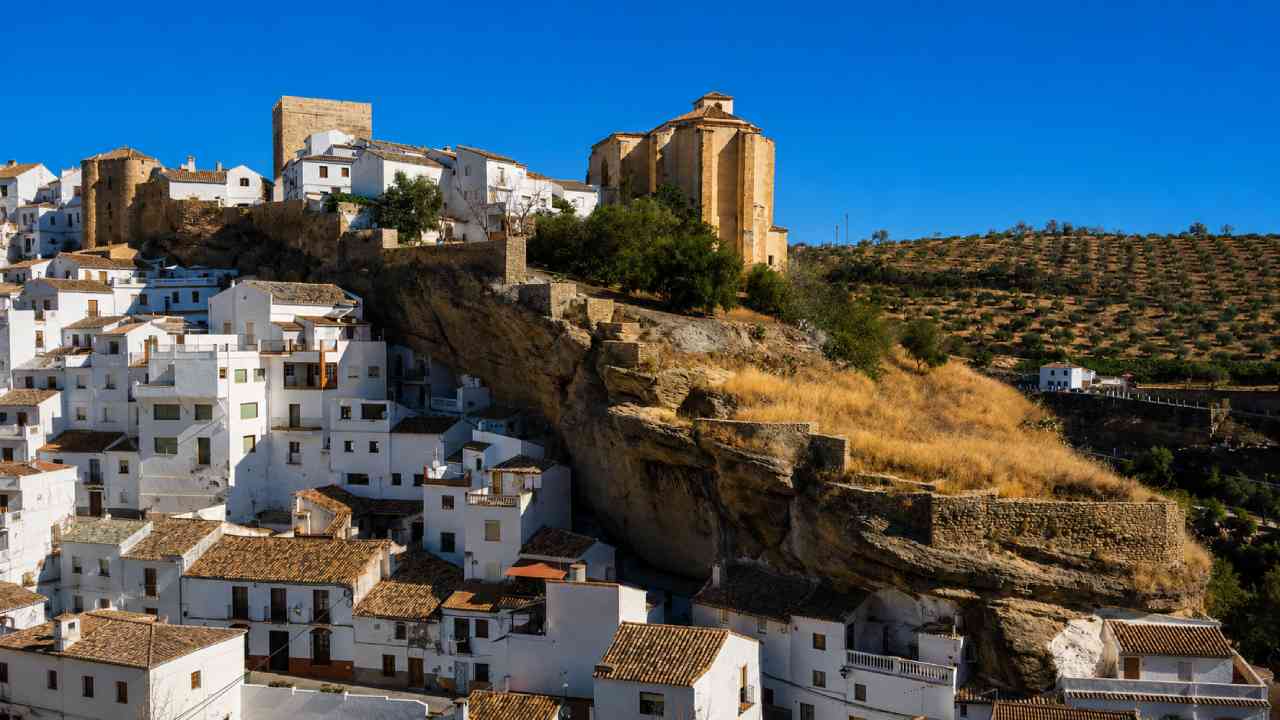
Trans to Find – Setenil de las Bodegas is the kind of destination that can make travelers question whether a photograph has been digitally altered. Located in Cádiz province in Andalusia, Spain, the town is famous for whitewashed buildings that sit beneath enormous rock overhangs. At street level, the effect is extraordinary. Instead of seeing a conventional roof above some buildings, visitors look upward and find a huge mass of natural stone. Yet this unusual appearance is not simply a modern attraction created for tourists. The settlement developed around the landscape and adapted to the rocky terrain rather than completely reshaping it. As a result, architecture and geology appear to merge. This relationship gives Setenil a character that differs from many other white villages across southern Spain. While Andalusia offers countless historic towns, few create such an immediate sense of disbelief. Here, nature does not merely surround the architecture. In several places, it becomes part of the architecture itself.
The Town Was Shaped by a Dramatic Natural Gorge
The unusual architecture becomes easier to understand when looking at the geography of Setenil de las Bodegas. The town developed along the Río Guadalporcún, where erosion helped shape a rocky gorge over a very long period. Rather than removing large sections of rock, early residents made practical use of existing cavities and overhangs. They enclosed suitable spaces with walls and gradually created buildings that worked with the natural terrain. This approach produced what is often described as shelter-under-rock architecture. Consequently, some structures appear to disappear directly beneath the cliff. The result feels almost impossible from certain angles because the scale of the rock is far greater than the buildings below it. However, this adaptation also reveals practical intelligence. Constructing around natural formations reduced the need to transform the entire landscape. Moreover, the rock itself offered environmental advantages. What looks spectacular to modern visitors was also a logical response to geography and climate.
Cuevas del Sol Reveals the Town’s Most Famous View
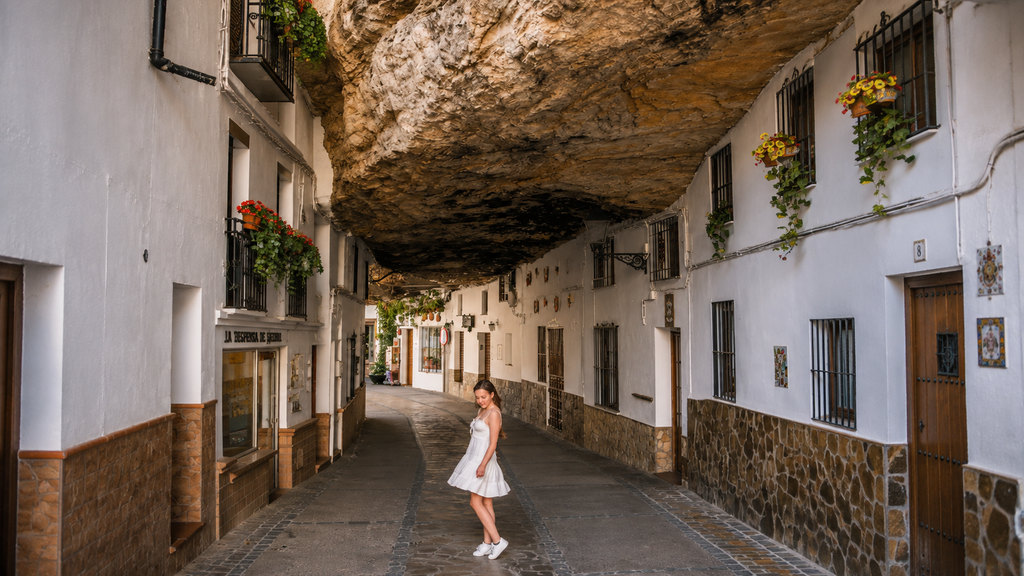
One of the best-known streets in Setenil de las Bodegas is Calle Cuevas del Sol. Its name translates roughly as the “Caves of the Sun.” Here, white buildings, cafés, and restaurants sit directly beneath a massive rock overhang. Sunlight can still reach parts of the street, which helps explain its name. Walking through the area creates an unusual sense of scale. Tables and chairs may occupy the pavement while an enormous natural ceiling stretches overhead. Moreover, the contrast between white façades and rough brown stone makes the street especially photogenic. Yet photographs only capture part of the experience. Standing beneath the rock reveals its size in a way that is difficult to appreciate on a screen. Visitors can also observe how modern businesses have adapted these historic spaces without removing their defining geological features. Therefore, Cuevas del Sol works as both a tourist attraction and an example of architecture responding directly to its surroundings.
Read Also: Nazi Shipwrecks Emerge From the Danube as Extreme Drought Exposes Wartime History
Cuevas de la Sombra Offers a Darker Experience
Nearby Calle Cuevas de la Sombra provides a different atmosphere. Its name means the “Caves of the Shade,” and the reason becomes obvious when walking beneath its dramatic rocky cover. Sections receive much less direct sunlight because the stone extends over the street. As a result, the area can feel almost tunnel-like. This contrast with Cuevas del Sol demonstrates how a small difference in geography can influence the character of an entire street. Moreover, it reinforces the feeling that Setenil de las Bodegas was built around the rock rather than simply beside it. Visitors often focus on photographing the huge stone ceiling. However, looking at the smaller architectural details can be equally rewarding. White walls, doors, balconies, shops, and everyday objects sit against surfaces formed by geological processes. That combination creates a visual dialogue between human scale and natural scale. Few conventional streets produce the same sensation.
Living Beneath Rock Has Practical Advantages
The rock houses are visually impressive, but their design also offers practical benefits. Thick stone has considerable thermal mass. Therefore, spaces built beneath or against rock can experience less dramatic temperature changes than exposed buildings. This characteristic is especially useful in Andalusia, where summer temperatures can become intense. The surrounding rock can help interiors remain relatively cooler during hot periods. Meanwhile, it can also moderate rapid temperature changes when outside conditions become colder. Of course, modern comfort depends on many factors, including ventilation, building materials, orientation, and renovation. Still, the underlying principle demonstrates why this architecture survived beyond its visual novelty. Residents were not building unusual homes simply to create beautiful streets. They were responding to their environment. In my view, this practical element makes Setenil de las Bodegas more interesting than a destination created primarily for tourism. Its most famous architectural feature developed because people found a clever way to live with difficult terrain.
The Whitewashed Streets Connect Setenil With Andalusia
Despite its extraordinary rock architecture, Setenil also belongs to a broader Andalusian tradition. The town forms part of the landscape associated with southern Spain’s famous pueblos blancos, or white villages. These settlements are known for whitewashed façades, narrow streets, hillside locations, and historic architecture. The bright walls are particularly striking beneath the strong Andalusian sun. However, Setenil de las Bodegas adds something unusual to this familiar visual language. Instead of white buildings standing clearly against hillsides, some disappear beneath dark layers of stone. The contrast makes the town instantly recognizable. Travelers who explore other white villages may encounter dramatic viewpoints, castles, churches, and steep lanes. Setenil offers many of those qualities too. Yet its rock-covered streets remain the defining feature. Consequently, the town feels both unmistakably Andalusian and completely different from its neighbors. That combination gives visitors a richer understanding of how geography can create variations within a regional architectural tradition.
Setenil Has More to Explore Beyond Its Rock Houses
It is easy to assume that the famous rock streets are the entire attraction. However, exploring beyond them reveals another side of Setenil de las Bodegas. The town climbs across uneven terrain, so walking toward its higher areas opens changing views over white houses, rooftops, surrounding hills, and the gorge below. Historic structures also reflect Setenil’s long and complex past. The elevated sections help visitors understand why the settlement developed in such a distinctive form. Moreover, moving away from the most photographed streets provides quieter moments. Small lanes, local businesses, balconies, and residential corners reveal a functioning town rather than an open-air attraction. This distinction matters. Beautiful destinations can sometimes become reduced to one famous photograph online. Yet the experience of visiting them often depends on everything surrounding that image. In Setenil, wandering between lower cave streets and higher historic areas gives the landscape context and makes the unusual architecture easier to appreciate.
Local Food Adds Another Layer to the Travel Experience
Architecture may bring travelers to Setenil, but food can encourage them to stay longer. Andalusia has a strong culinary identity shaped by local agriculture, olive oil, meat, vegetables, bread, and regional traditions. Restaurants and cafés positioned beneath the rock formations give visitors an especially memorable setting for experiencing those flavors. Eating under a huge natural overhang feels very different from dining inside an ordinary restaurant. However, the setting should not overshadow the importance of local food culture itself. Smaller Spanish towns often provide opportunities to discover regional dishes without the pace of major tourism centers. In addition, taking time for a meal changes how visitors experience Setenil de las Bodegas. Instead of rushing between photography locations, they can observe everyday movement through the streets. Travel becomes slower and more sensory. The sound of conversation, changing light, cool shade beneath the rocks, and local food together create a stronger memory than a quick photograph alone.
The Town Creates an Optical Illusion Without Trying
Part of Setenil’s appeal comes from how strongly it challenges our expectations about buildings. Most people instinctively expect a simple sequence: street, building, roof, and sky. In parts of Setenil de las Bodegas, that familiar order disappears. A street leads toward a white building, but an enormous rock formation suddenly occupies the space where the sky should be. This creates an almost surreal optical effect. From some perspectives, the stone appears dangerously close to the buildings below. In reality, the architecture developed around these existing formations. Still, the visual tension remains powerful. Modern travelers are accustomed to seeing extraordinary images created with digital editing and artificial intelligence. Therefore, authentic landscapes that look digitally constructed can feel even more fascinating. Setenil belongs to that category. It does not require unusual filters or exaggerated editing to appear unreal. The simple relationship between stone, architecture, and scale already creates a scene that seems borrowed from fantasy.
Setenil de las Bodegas Rewards Travelers Who Slow Down
The most memorable way to experience Setenil de las Bodegas may be to avoid treating it as a single-photo destination. Its famous streets deserve attention, but the town becomes more interesting when explored slowly. Walking reveals how buildings respond differently to the terrain. Some sit completely beneath rock. Others appear more conventional. Meanwhile, higher viewpoints provide a broader perspective on the settlement and surrounding Andalusian landscape. This gradual discovery helps explain why Setenil feels so unusual. It is not one spectacular structure placed in an otherwise ordinary location. Instead, geology has influenced the town’s architecture, streets, climate adaptation, and visual identity. That relationship has developed across generations. For travelers interested in architecture, photography, history, or unusual landscapes, the destination offers several stories at once. Perhaps that is why its images continue to attract attention. Setenil proves that some of the world’s most surreal places were not designed to look extraordinary. They became extraordinary because people learned how to live with the landscape already there.