Neuschwanstein Castle The Real-Life Fairytale Fortress of Germany
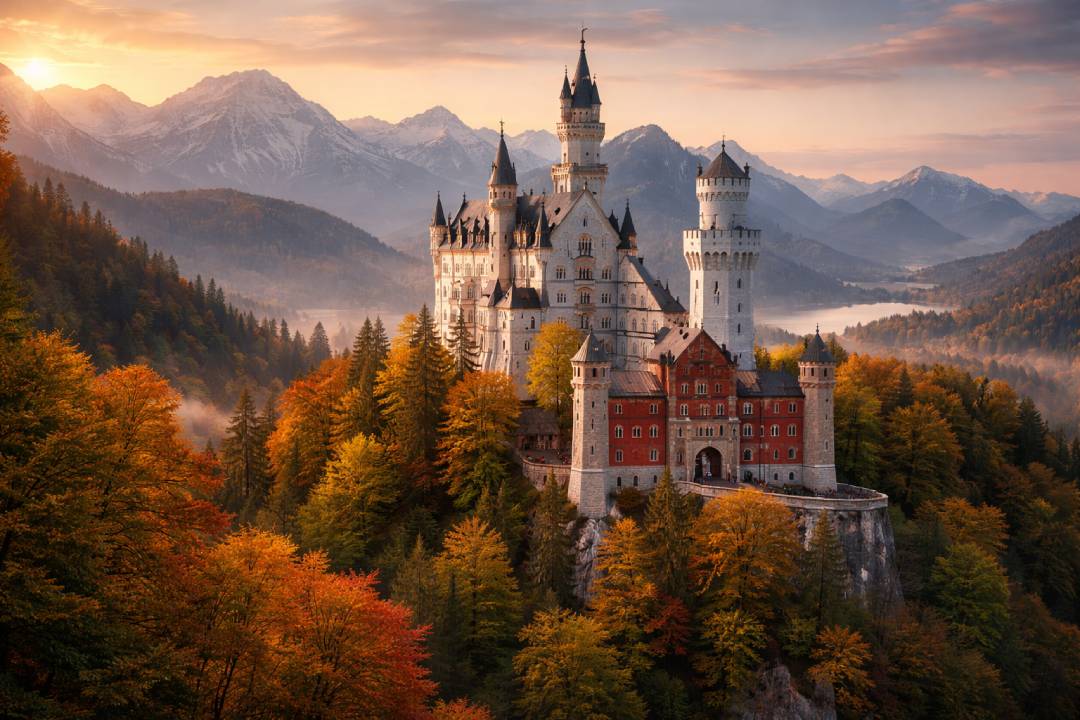
Trans to Find – Neuschwanstein Castle The Real-Life Fairytale Fortress of Germany stands high above the Bavarian landscape like something lifted from a storybook. At first glance, its towers and white limestone walls seem almost unreal. However, behind its romantic appearance lies a fascinating historical narrative. Built in the 19th century, the castle reflects both imagination and political tension. Moreover, it represents the personal vision of a king who preferred dreams over diplomacy. Today, millions of travelers visit this landmark every year. Therefore, Neuschwanstein Castle is not only a tourist destination but also a symbol of artistic ambition and cultural identity.
The Vision of King Ludwig II
To understand Neuschwanstein Castle The Real-Life Fairytale Fortress of Germany, one must first understand King Ludwig II of Bavaria. Known as the “Fairy Tale King,” Ludwig was deeply inspired by medieval legends and the operas of Richard Wagner. Consequently, he commissioned the castle in 1869 as a private retreat rather than a political residence. Interestingly, the castle was never intended to host royal ceremonies. Instead, it served as a personal sanctuary. Although critics at the time questioned his spending, Ludwig’s vision ultimately created one of the world’s most photographed castles.
“Read Also: Campers Sleeping on Unmarked Graves: The Dark History Beneath Rottnest Island’s Paradise“
A Romantic Interpretation of the Middle Ages
While the castle looks medieval, it was actually built centuries after the Middle Ages ended. In fact, Neuschwanstein Castle reflects a 19th-century romantic interpretation of medieval architecture. Its pointed towers and decorative interiors were designed to evoke chivalry and legend. Furthermore, the murals inside depict scenes from German myths. Therefore, the castle is not historically medieval but artistically inspired. This distinction is important because it highlights how imagination shaped the project more than tradition.
Architectural Beauty Above the Bavarian Alps
Neuschwanstein Castle The Real-Life Fairytale Fortress of Germany is located in Bavaria, near the town of Füssen. From its hilltop position, visitors enjoy panoramic views of forests and lakes. Additionally, the nearby Marienbrücke bridge offers one of the most iconic perspectives of the castle. Because of its dramatic setting, the fortress appears almost cinematic. During winter, snow enhances its fairytale atmosphere. Meanwhile, autumn colors create a warm contrast against its white façade. As a result, every season offers a unique visual experience.
The Inspiration Behind Disney’s Castle
One of the most fascinating aspects of Neuschwanstein Castle is its influence on modern pop culture. The castle famously inspired the design of Sleeping Beauty’s castle in Disney films. Consequently, it became associated with fantasy worldwide. However, the original structure carries deeper historical significance. Unlike fictional castles, Neuschwanstein reflects real political and emotional narratives. Therefore, while Disney popularized its image, the castle’s legacy goes far beyond animation.
A Controversial Construction
Despite its beauty, the construction of Neuschwanstein Castle sparked controversy. King Ludwig II funded the project largely through personal means and loans. As expenses increased, government officials grew concerned. Eventually, Ludwig was declared unfit to rule in 1886. Shortly afterward, he died under mysterious circumstances. Although tragic, his legacy endured. Ironically, the castle that once caused financial strain later became a major source of tourism revenue for Germany.
From Private Retreat to Global Landmark
Originally, Neuschwanstein Castle was intended as a secluded refuge. Nevertheless, after Ludwig’s death, it opened to the public. Since then, it has welcomed more than one million visitors annually. This transformation illustrates how personal vision can evolve into shared heritage. Moreover, the castle contributes significantly to Bavaria’s economy. Through guided tours and preservation efforts, authorities ensure its long-term protection. Therefore, Neuschwanstein Castle continues to balance historical authenticity with modern tourism demands.
Cultural Significance in Modern Germany
Neuschwanstein Castle The Real-Life Fairytale Fortress of Germany remains one of the country’s most recognizable landmarks. Beyond tourism, it represents Germany’s romantic artistic heritage. Additionally, it reflects a period of national identity formation in the 19th century. While some still debate Ludwig’s motives, many admire his dedication to creativity. In my view, the castle demonstrates how vision and imagination can outlive controversy. Ultimately, Neuschwanstein Castle stands not merely as a building, but as a lasting symbol of cultural storytelling and architectural ambition.