Zhangye Danxia, China’s Colorful Natural Wonder
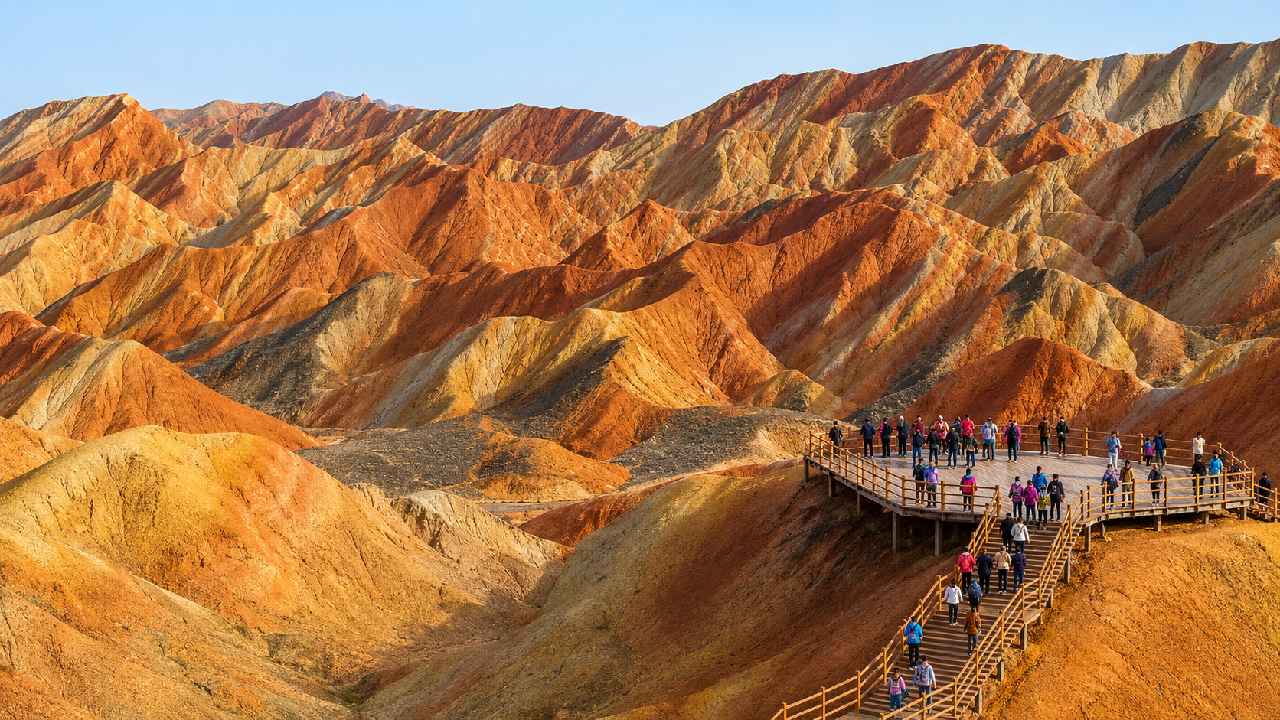
Trans to Find – Zhangye Danxia is one of China’s most extraordinary natural attractions. The destination features rolling hills covered in red, orange, yellow, brown, and pale green stripes. From a distance, those layers resemble brushstrokes across a giant canvas. Yet the scenery is completely natural. Wind, rain, minerals, and movements beneath Earth’s surface created this remarkable landscape over millions of years. Moreover, sunlight changes its appearance throughout the day. The colors look gentle in the morning but become warmer near sunset. As shadows move across the ridges, every viewing platform reveals a different pattern. Many travelers first discover the destination through highly saturated photographs online. However, the real landscape offers something pictures cannot fully capture: immense scale, desert silence, and countless layers stretching toward the horizon. For that reason, visiting these colorful hills can feel like entering another world.
Where Zhangye Danxia Is Located
Zhangye Danxia lies near Zhangye City in Gansu Province, northwestern China. The region forms part of the Hexi Corridor, an important route along the ancient Silk Road. Therefore, a visit combines natural beauty with a rich historical setting. Zhangye once welcomed merchants, travelers, and different cultures moving between China and Central Asia. Today, it serves as the main gateway to the colorful hills. The wider area also sits near the Qilian Mountains, where dry plains meet rugged highland scenery. This remote location gives the destination a peaceful and almost cinematic atmosphere. Even so, travelers can reach the main scenic zone from Zhangye by private vehicle, organized tour, or available local transport. The landscape belongs to Zhangye UNESCO Global Geopark, which gained UNESCO Global Geopark status in 2020. Its protected setting highlights both geological heritage and responsible tourism.
How the Rainbow-Colored Hills Were Formed
The formation of Zhangye Danxia began when layers of sand, silt, and other sediments accumulated across the region. Each layer contained a different mixture of minerals. Iron-rich material produced many of the striking red and orange tones. Meanwhile, other minerals created yellow, brown, gray, and greenish bands. Over an immense period, movements in Earth’s crust compressed and folded these deposits. The land then rose as nearby mountain systems developed. Afterward, wind, rain, and changing temperatures slowly removed softer material. This erosion exposed the colorful layers beneath the surface. As a result, ridges, valleys, cliffs, and smooth slopes appeared across the landscape. The visible stripes are not artificial paint or digital effects. Instead, they are part of a geological record shaped by pressure and time. Understanding this process makes the scenery even more impressive because every band reveals a different chapter in Earth’s history.
Read Also: He Was Told He’d Never Walk Again, Yet Friendship Took Him Across the World
Why the Landscape Looks Almost Unreal
Most mountain destinations attract visitors with towering peaks or dense forests. Zhangye Danxia creates wonder through color, texture, and repetition. Its bands follow the curves of the hills like ribbons laid across folded fabric. In addition, erosion has created sharp edges beside smooth, flowing slopes. This contrast makes the landscape appear to move when viewed from different angles. Weather also affects the experience. After light rain, moisture can deepen the colors and increase their contrast. By comparison, harsh midday sunlight may make some layers appear flatter. Late-afternoon light usually produces longer shadows and warmer shades. Although edited travel photographs often exaggerate the colors, the natural view remains remarkable. In my opinion, its true beauty comes from subtle variations rather than extreme saturation. The longer visitors observe the hills, the more details they notice. That slow discovery makes the destination feel both dramatic and deeply calming.
The Best Season to Plan a Visit
Late spring to early autumn generally provides suitable conditions for visiting the colorful hills. During these months, access is often easier, and daylight lasts longer. Summer can deliver vivid scenery, especially after rain. However, it may also bring stronger sunlight and larger crowds. Early autumn is another appealing option because temperatures often become more comfortable. Furthermore, the softer seasonal light can improve the appearance of distant ridges. Visitors who enjoy photography should consider arriving in the morning or staying until late afternoon. Sunrise creates a gentle atmosphere, while sunset brings out warmer red and golden tones. Nevertheless, weather can change quickly in northwestern China. Daytime temperatures may feel warm, but evenings can become surprisingly cool. Therefore, travelers should carry layers and check the forecast before leaving Zhangye City. Current opening times and transport arrangements should also be confirmed before the trip.
Exploring the Main Observation Platforms
Visitors usually experience Zhangye Danxia from several designated observation platforms. Shuttle services connect the main viewing areas, making the site easier to explore without walking across fragile terrain. Each stop offers a different perspective. Some platforms overlook broad hills with long horizontal stripes. Others reveal tighter folds, deep valleys, and sharper formations. Instead of rushing through every stop, travelers should spend time studying how the light moves across each ridge. A viewpoint that appears ordinary at first may become dramatic several minutes later. Comfortable shoes remain important because visitors may need to walk up steps or follow elevated pathways. It is also wise to remember the final shuttle schedule. During busy periods, queues can form near popular sunset viewpoints. Arriving early creates more time to find a good position. Most importantly, visitors must remain on marked paths because the exposed rock surface is delicate and easily damaged.
Photography Tips for More Natural Images
Zhangye Danxia is a dream destination for landscape photographers, but good results require careful composition. First, use a wide frame to show the scale of the hills. Next, try a longer focal length to isolate colorful patterns and distant ridges. A pathway or small human figure can provide scale, although the landscape should remain the main subject. Morning and evening light usually reveal more texture because shadows emphasize every fold. Meanwhile, bright midday conditions may reduce depth. Smartphone users can slightly lower the exposure to preserve details in the brightest areas. They should also avoid excessive digital zoom, which may reduce image quality. After taking the photograph, keep the editing balanced. Moderate adjustments to contrast and warmth can improve the image. However, extreme saturation may make the hills appear artificial. The most convincing photographs preserve the destination’s natural tones, fine textures, and spacious atmosphere.
Essential Tips for a Comfortable Journey
Preparation can make a visit more enjoyable, especially because the region has a dry climate. Carry drinking water, sunscreen, sunglasses, and a hat to protect yourself from strong sunlight. In addition, bring a light jacket because temperatures may fall after sunset. Comfortable walking shoes are essential for steps and viewing-platform routes. Travelers who use cameras should pack a spare battery or portable charger. Dust and wind may also affect lenses, so a microfiber cloth can be helpful. Since mobile signals and language support may vary, save accommodation details and important addresses offline. A translation application can simplify communication with drivers or local staff. Furthermore, allow enough time between transport connections. A rushed itinerary can remove the quiet sense of discovery that makes this destination special. The most rewarding visits often happen when travelers leave space to observe rather than moving constantly.
Responsible Tourism Protects the Colorful Hills
Although the formations appear strong, their exposed surfaces remain vulnerable. Walking beyond designated areas may disturb rock layers and increase erosion. Therefore, visitors should always follow signs, barriers, and instructions from local staff. Rocks, plants, and other natural objects must remain where they belong. Travelers should also take all waste with them and avoid leaving marks on viewing facilities. Responsible behavior protects the landscape while supporting its scientific and educational value. Moreover, respectful tourism benefits communities that depend on the region’s natural and cultural heritage. Choosing local accommodation, guides, or food can contribute to the surrounding economy. Photography is the best souvenir because it preserves a memory without removing anything from the site. When thousands of visitors make careful choices, their combined impact becomes significant. Protecting Zhangye Danxia ensures that future travelers can experience the same striking colors and geological patterns.
A Natural Wonder Beyond Its Famous Colors
The colorful hills attract attention, yet the journey offers more than a beautiful background. Zhangye connects geological history, Silk Road culture, desert scenery, and local life in one destination. Travelers may arrive after seeing a dramatic photograph, but they often leave with a deeper appreciation for natural time. Every ridge shows how slow changes can produce extraordinary results. In contrast to attractions built for quick entertainment, this landscape rewards patience. Visitors must pause, watch the sunlight shift, and notice small differences between distant layers. That quiet process turns sightseeing into a more personal experience. Zhangye Danxia feels unreal at first because its colors challenge familiar ideas about mountains. However, its greatest appeal lies in the fact that it is real. Nature created the landscape without paint, design, or digital effects, making it one of China’s most memorable travel experiences.