Shinjuku Gyoen Tokyo’s Most Beautiful Urban Garden Escape
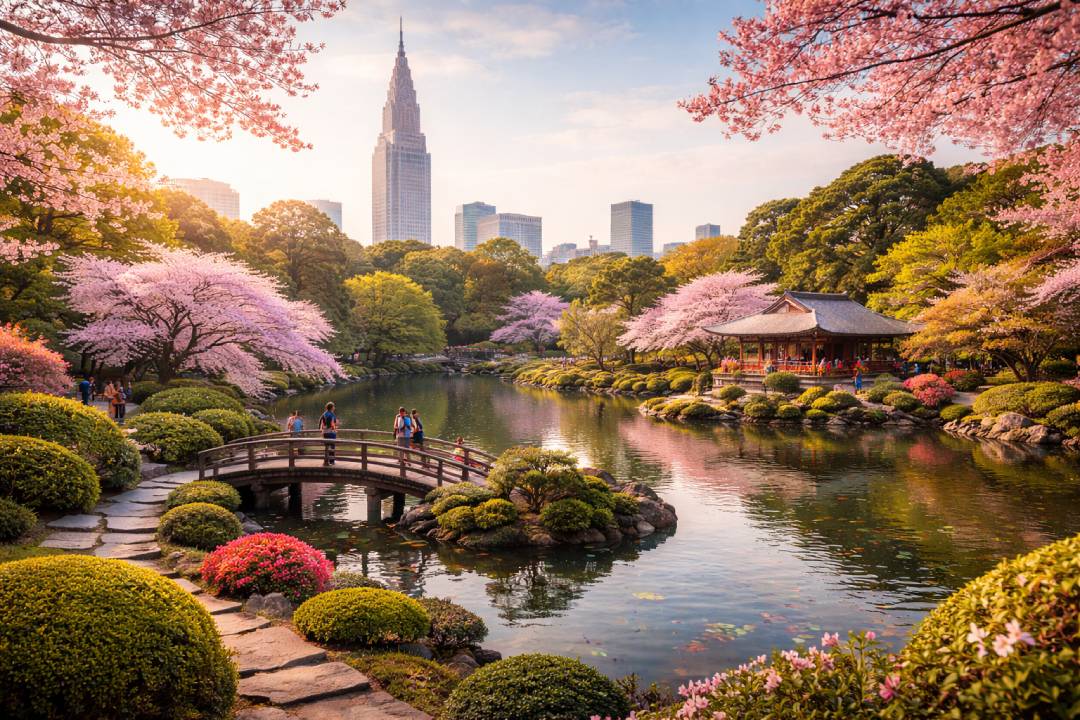
Trans to Find – Shinjuku Gyoen Tokyo’s Most Beautiful Urban Garden Escape offers a rare contrast to the city’s fast rhythm. While Tokyo is famous for neon lights and crowded intersections, this garden provides silence and balance. Located in the busy Shinjuku district, the park feels like a hidden sanctuary. As soon as visitors pass through the gates, the atmosphere shifts dramatically. Skyscrapers fade into the background, and wide lawns replace concrete streets. Clear ponds reflect the sky, while carefully arranged trees frame every pathway. Therefore, the garden becomes more than just a public park. It turns into a breathing space within one of the world’s most dynamic capitals.
A Historical Legacy from the Edo Period
The story of Shinjuku Gyoen begins in the Edo period. Originally, the land belonged to a feudal lord before later becoming an imperial garden. Eventually, it opened to the public and evolved into a national garden. Because of this layered history, the space carries cultural depth. Unlike modern urban parks built purely for recreation, this garden reflects Japan’s historical transitions. Walking through its grounds feels like stepping across time. In my view, this historical continuity adds emotional value. Visitors do not simply admire the scenery. Instead, they experience a quiet connection to Japan’s past.
“Read Also: US and Israel Attack Iran as Tehran Retaliates Across the Middle East, Raising Fears of Regional War“
A Unique Blend of Japanese, French, and English Garden Design
One of the most fascinating aspects of Shinjuku Gyoen is its design diversity. The garden combines three distinct landscaping styles. First, the traditional Japanese garden emphasizes harmony and natural flow. Second, the French formal garden introduces symmetry and structured elegance. Finally, the English landscape garden offers open lawns and gentle curves. Because of this combination, visitors encounter different moods within one location. Moreover, this fusion reflects Japan’s openness to global influences while preserving its identity. Consequently, the garden feels both international and deeply local.
A Seasonal Masterpiece Throughout the Year
Although beautiful year-round, Shinjuku Gyoen becomes extraordinary during seasonal transitions. In spring, thousands of cherry blossoms bloom, creating one of Tokyo’s most celebrated hanami spots. Meanwhile, autumn transforms the park into a palette of red and gold foliage. As a result, photographers and travelers return repeatedly. Seasonal variation keeps the experience fresh. Unlike indoor attractions, this garden changes naturally over time. Therefore, every visit offers a slightly different perspective. That evolving beauty explains why the park remains consistently popular.
A Calm Refuge for Urban Residents
Beyond tourism, Shinjuku Gyoen serves as a daily retreat for local residents. Many people come here to read, meditate, or simply walk slowly. Compared to Tokyo’s crowded train stations, the garden provides mental clarity. In fact, urban studies often highlight the importance of green spaces for emotional well-being. Shinjuku Gyoen illustrates this principle perfectly. Its wide lawns allow personal space, which feels rare in dense cities. Consequently, the garden supports not only recreation but also psychological balance.
Traditional Tea House and Cultural Atmosphere
Inside the garden stands a traditional Japanese tea house overlooking a serene pond. Visitors can enjoy matcha while observing koi fish glide beneath wooden bridges. This experience reinforces the cultural identity of the space. Rather than feeling commercialized, the tea house maintains authenticity. Additionally, it encourages slower interaction with the environment. In my opinion, this cultural detail transforms a simple visit into a meaningful memory. It reminds travelers that Tokyo is not only futuristic but also deeply rooted in tradition.
Accessibility and Urban Integration
Another strength of Shinjuku Gyoen lies in its accessibility. Situated near major transport hubs, the garden is easy to reach. Despite this convenience, entry fees remain affordable. Consequently, the space welcomes diverse visitors. Furthermore, the park demonstrates how large cities can integrate nature without compromising development. While many metropolises struggle with overcrowding, Tokyo preserves this vast green area. Therefore, Shinjuku Gyoen becomes a model of balanced urban planning.
Why It Remains Tokyo’s Most Beautiful Urban Escape
Ultimately, Shinjuku Gyoen: Tokyo’s Most Beautiful Urban Garden Escape lives up to its title. The garden combines history, design diversity, seasonal beauty, and emotional tranquility. Unlike commercial attractions, it offers authenticity. Its charm lies not in spectacle but in subtle harmony. For travelers seeking balance within Tokyo’s intensity, this garden provides relief. In conclusion—without exaggeration, it stands as a reminder that even the busiest cities can nurture calm. And perhaps that quiet beauty is what makes it truly unforgettable.