This Indonesian Crater Lake Changes Colors Throughout the Year
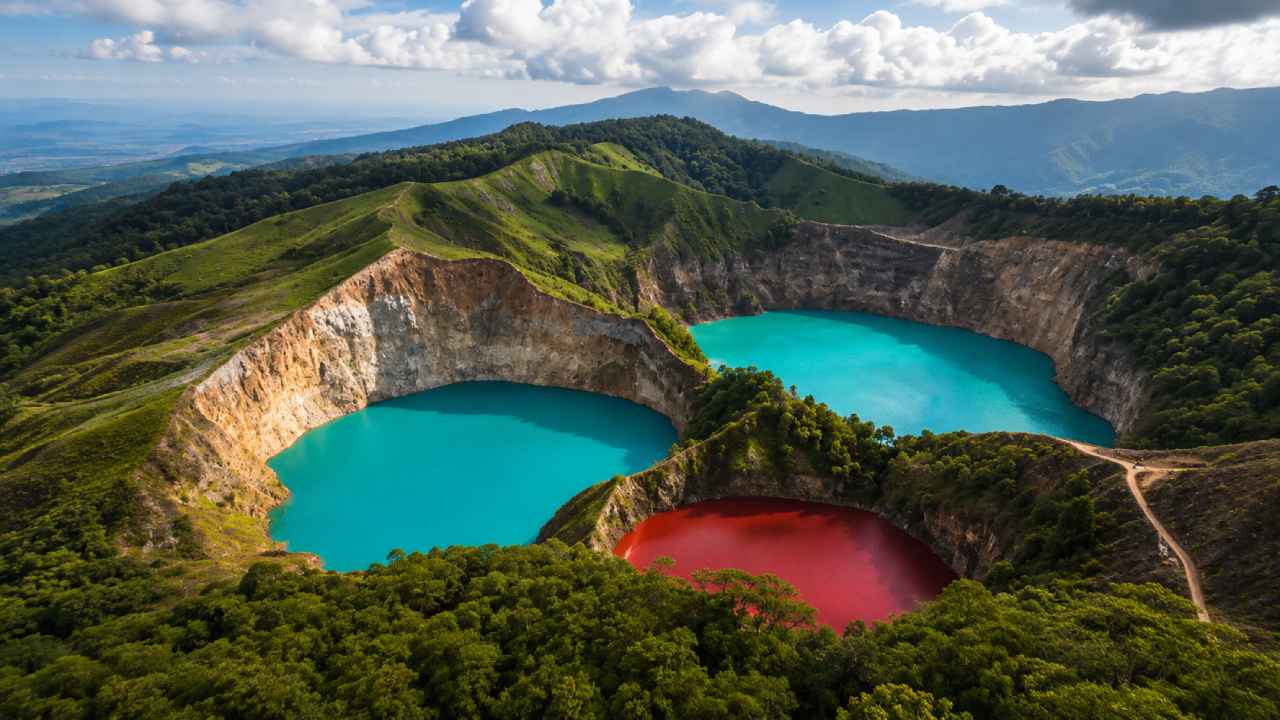
Trans to Find – An Indonesian Crater Lake on Flores Island appears to change its personality throughout the year. At Mount Kelimutu, three volcanic lakes sit close together, yet each can display a different color. Their waters may appear turquoise, green, white, brown, red, or almost black. Even more surprisingly, the colors do not follow a simple seasonal schedule. Instead, they shift as conditions inside the volcano change. This unusual landscape has made Kelimutu one of Indonesia’s most distinctive natural attractions. However, the lakes are more than a beautiful travel destination. They also carry deep cultural meaning for local communities. At sunrise, mist often drifts across the crater walls while the first light reaches the water. The scene feels quiet, dramatic, and almost unreal. For travelers who enjoy nature, geology, and local traditions, Kelimutu offers a journey that feels both visually powerful and emotionally memorable.
Mount Kelimutu Holds Three Remarkable Volcanic Lakes
Mount Kelimutu stands on Flores Island in East Nusa Tenggara, Indonesia. Its summit contains three separate crater lakes within the same volcanic complex. Although they are located close together, the lakes often show different shades at the same time. That contrast creates the famous tri-colored view associated with Kelimutu. The landscape becomes even more striking because steep crater walls surround each body of water. Meanwhile, forested mountain slopes extend beyond the summit. The combination of vivid water, dark volcanic rock, and drifting cloud gives the area a dreamlike appearance. Unlike many lakes that keep a fairly stable color, Kelimutu can look different from one visit to another. Therefore, travelers should not expect one fixed palette. In my view, that unpredictability makes the destination more interesting. Visitors are not simply seeing a famous landmark. They are witnessing an active natural system that continues to evolve.
Why the Lakes Change Their Colors Over Time
The changing colors are closely connected to volcanic and chemical processes below the water. Gases and mineral-rich fluids can enter the lakes through cracks in the crater floor. As a result, the water’s acidity, oxygen levels, and mineral balance may change. These shifts affect how light interacts with particles and dissolved substances in the lakes. Iron compounds and sulfur are among the elements that can influence the visible color. However, the process is complex, and each lake may react differently. NASA has described Kelimutu’s three lakes as unpredictable color-changing volcanic features, with shades ranging from milky white to turquoise and deep red. Historical observations have also recorded sudden changes, including one lake turning from blue to a light brown shade. Therefore, the colors are not simply decorative. They may also reflect ongoing activity inside the volcanic system.
Read Also: US Strikes 140 Iranian Targets as Gulf States Face Retaliation
Each Lake Has a Name and Spiritual Meaning
For local communities, Kelimutu is not only a geological wonder. The three lakes hold important spiritual meaning. Tiwu Ata Mbupu is traditionally associated with the souls of elderly people who have died. Tiwu Nuwa Muri Koo Fai is linked with the spirits of young people. Meanwhile, Tiwu Ata Polo is connected with souls believed to have behaved badly during life. These beliefs add a powerful cultural layer to the landscape. As a result, the lakes are often treated with respect rather than viewed only as tourist attractions. Local traditions help explain why Kelimutu feels different from an ordinary viewpoint. Visitors are entering a place where nature, memory, and community identity meet. In my opinion, understanding these stories makes the journey more meaningful. The colorful water may first attract attention, but the cultural connection often leaves a deeper impression.
Sunrise Creates Kelimutu’s Most Memorable View
Many travelers arrive before dawn because sunrise offers the most dramatic experience. The journey usually begins in darkness, often from the nearby village of Moni. As visitors approach the viewpoint, the sky slowly changes from deep blue to soft orange. Then, sunlight begins to reveal the crater walls and lake surfaces. Mist may cover part of the landscape, but it often adds atmosphere rather than ruining the view. Because the weather changes quickly, no two mornings feel exactly the same. One day may offer a clear panorama, while another creates a mysterious scene filled with cloud. Therefore, patience is important. The temperature can also feel cold before sunrise, especially at higher elevation. A warm layer makes the experience more comfortable. Even when the lakes appear partly hidden, the quiet mountain setting can still feel unforgettable.
The Walk to the Viewpoint Is Manageable for Most Visitors
Kelimutu offers a relatively accessible mountain experience compared with longer Indonesian volcano hikes. Visitors can travel by vehicle to the national park area and continue on foot toward the main viewpoint. The final walk generally follows a marked route with paths and steps. Although some sections rise steadily, the route does not require technical climbing. Therefore, many visitors with average fitness can complete it at a comfortable pace. Still, proper footwear remains useful because surfaces may feel wet or uneven. Early morning darkness can also make a small flashlight helpful. Taking time along the trail allows visitors to enjoy the surrounding vegetation and mountain air. However, travelers should stay on the designated route. Crater edges can be dangerous, and volcanic terrain may be unstable. A cautious approach protects both visitors and the landscape.
Moni Offers a Practical Base for Exploring Kelimutu
The village of Moni is commonly used as a base for visiting Mount Kelimutu. Its location allows travelers to begin the journey before sunrise without traveling from a distant city. The village offers small guesthouses, local food, and a quieter atmosphere than major tourist centers. Staying nearby also creates opportunities to explore rural Flores beyond the famous lakes. Travelers may encounter farms, traditional villages, waterfalls, and mountain roads along the way. Consequently, Kelimutu can become part of a wider cultural journey rather than a single photo stop. Reaching Flores usually requires more planning than visiting Bali or Java. However, that added effort can make the experience feel more rewarding. The slower pace encourages visitors to notice local life and appreciate the island’s geography. For many travelers, the road to Kelimutu becomes part of the story.
The Best Time to Visit Depends on Weather Conditions
Dry-season months often provide a better chance of clear morning views. However, mountain weather remains unpredictable throughout the year. Rain, wind, and cloud can arrive quickly, even when the forecast appears favorable. Therefore, travelers should avoid building the entire trip around one perfect photograph. Allowing an extra morning creates another opportunity if heavy fog covers the lakes. Early arrival is also helpful because clouds may build later in the day. Nevertheless, every season can offer a different atmosphere. Rainy periods create greener hills and softer light, while drier conditions may provide wider visibility. The lake colors themselves do not follow a dependable tourist calendar. Their changes relate to chemical and volcanic conditions rather than simple weather patterns. As a result, visitors may discover unexpected shades at any time of year.
Responsible Travel Helps Protect the Fragile Landscape
Kelimutu sits within a protected national park, so responsible behavior matters. Visitors should carry out their rubbish and avoid leaving food packaging along the trail. They should also avoid climbing over barriers or approaching unstable crater edges. Besides creating safety risks, careless movement can damage fragile vegetation. Respect for local culture is equally important. The lakes hold spiritual value, and visitors should treat ceremonies or traditional practices with sensitivity. Hiring local drivers, guides, or accommodation providers can also support communities around the park. In addition, travelers should bring reusable water bottles when practical. Small decisions may appear minor, yet they help reduce pressure on popular natural sites. In my view, a memorable travel experience should never come at the cost of the place itself. Kelimutu’s beauty depends on both natural forces and careful protection.
Why This Indonesian Crater Lake Feels Almost Unreal
The appeal of this Indonesian Crater Lake comes from more than its unusual colors. Kelimutu combines geology, culture, mystery, and travel adventure in one landscape. The three lakes can change without warning, while local stories give each one a distinct identity. Meanwhile, sunrise transforms the crater into a scene that looks almost painted. This mix makes Kelimutu difficult to compare with other destinations. It is not simply a mountain, a lake, or a cultural site. Instead, it brings all three experiences together. Travelers may arrive because they have seen dramatic photographs. However, many leave with a stronger appreciation for Flores and its communities. Ultimately, Kelimutu reminds us that the most powerful places are not always the easiest to explain. Sometimes, their beauty comes from constant change.