Colosseum in Rome The Timeless Icon of Ancient Roman History
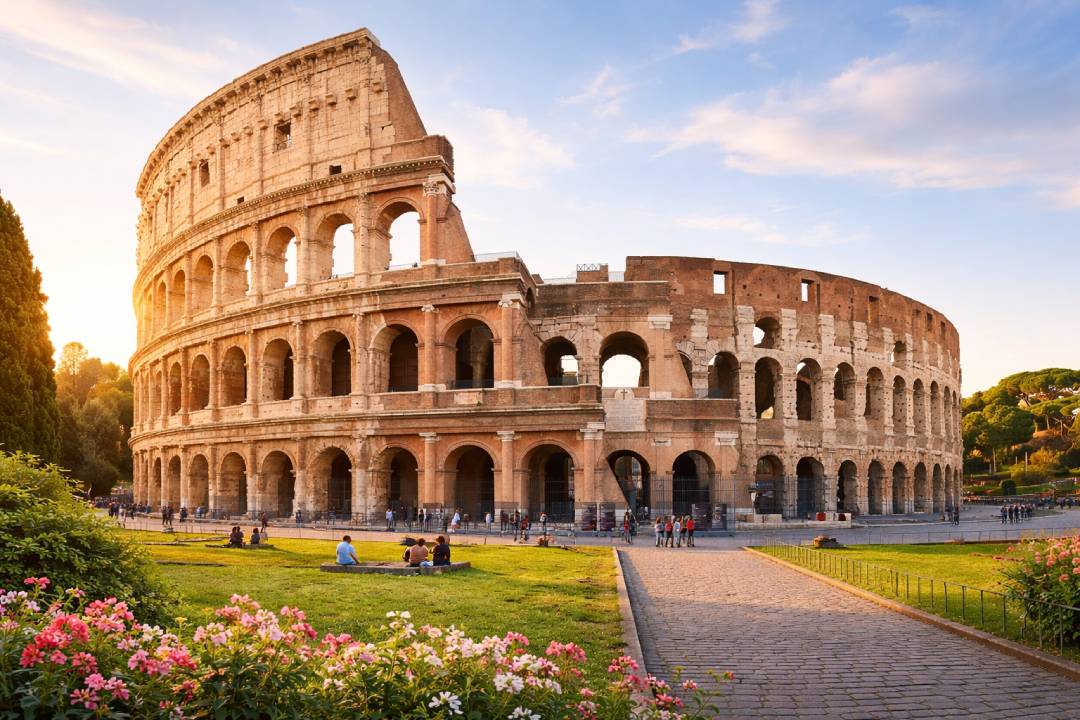
Trans to Find – Colosseum in Rome The Timeless Icon of Ancient Roman History stands as one of the most recognizable monuments in the world. Built nearly two thousand years ago, this grand amphitheater continues to draw millions of visitors each year. At first glance, its massive stone arches symbolize architectural brilliance. However, beyond its structure lies a deeper story of power, politics, entertainment, and human drama. Therefore, understanding the Colosseum means exploring not only Roman engineering but also the cultural identity of an empire that shaped Western civilization.
The Origins of a Monumental Arena
Construction of the Colosseum began in AD 72 under Emperor Vespasian and was completed by his son Titus in AD 80. Importantly, it was built on the site of Nero’s former palace, signaling a political shift back to public ownership. This decision, consequently, strengthened imperial popularity. The amphitheater could host between 50,000 and 80,000 spectators, making it the largest of its kind at the time. Compared to earlier Roman arenas, the Colosseum demonstrated unprecedented scale and organization. In my view, this strategic public project reflected both political intelligence and architectural ambition.
“Read Also: FIFA Approves “Vinicius Law” Ahead of 2026 World Cup: A New Chapter in the Fight Against Racism“
Engineering Brilliance Ahead of Its Time
From an architectural perspective, the Colosseum remains extraordinary. Roman engineers used concrete, travertine stone, and an advanced system of arches to create stability. Moreover, the underground network known as the hypogeum allowed animals and gladiators to enter dramatically into the arena. Elevators and trapdoors operated manually, yet efficiently. Even modern stadiums borrow design principles from this elliptical structure. Therefore, the Colosseum in Rome: The Timeless Icon of Ancient Roman History continues to influence contemporary architecture.
Gladiators and Public Spectacle
The Colosseum was primarily used for gladiatorial contests and staged hunts. These events served both as entertainment and as political messaging. While brutal by modern standards, they reinforced imperial authority. Spectacles often lasted for days and included elaborate set designs. Additionally, free admission ensured that citizens of various social classes attended. As a result, the arena functioned as both theater and propaganda. Personally, I find it fascinating how entertainment and governance intertwined so closely in Roman society.
Social Hierarchy Reflected in Seating Design
Interestingly, seating arrangements mirrored Roman social order. Senators occupied the front rows, followed by knights, citizens, and finally women and slaves in upper tiers. This physical separation reinforced class distinctions. At the same time, everyone shared the same spectacle. Consequently, the Colosseum became a space where unity and inequality coexisted visibly. Compared to modern stadiums, VIP sections still echo this ancient tradition. Thus, Roman social structures remain subtly embedded in contemporary event culture.
Transformation Through the Centuries
After the fall of the Roman Empire, the Colosseum experienced various transformations. It was used as a fortress, a quarry, and even housing. Earthquakes damaged significant portions of its outer walls. Nevertheless, the structure endured. In later centuries, it became a Christian symbol and a protected monument. This evolution highlights how historical landmarks adapt to shifting cultural narratives. Therefore, preservation efforts today reflect a commitment to honoring layered histories rather than a single interpretation.
Tourism and Cultural Impact Today
Today, the Colosseum attracts millions of visitors annually. It is part of a larger archaeological complex including the Roman Forum and Palatine Hill. Visiting in spring often offers milder temperatures and manageable crowds. Furthermore, guided tours provide context that enriches the experience. From a travel perspective, few landmarks combine historical weight and visual impact so powerfully. Consequently, it remains Rome’s most visited attraction and a central pillar of Italy’s tourism economy.
Lessons from a Timeless Structure
Ultimately, Colosseum in Rome: The Timeless Icon of Ancient Roman History represents more than ancient stone. It embodies ambition, innovation, and the complexities of empire. While its origins include violence and spectacle, its legacy now emphasizes education and preservation. In my opinion, its endurance teaches us about resilience and transformation. Therefore, the Colosseum continues to inspire historians, architects, and travelers alike. Through centuries of change, it stands not merely as ruins, but as a living testament to human history.