Marble Caves: The Surreal Destination That Looks Like Another World
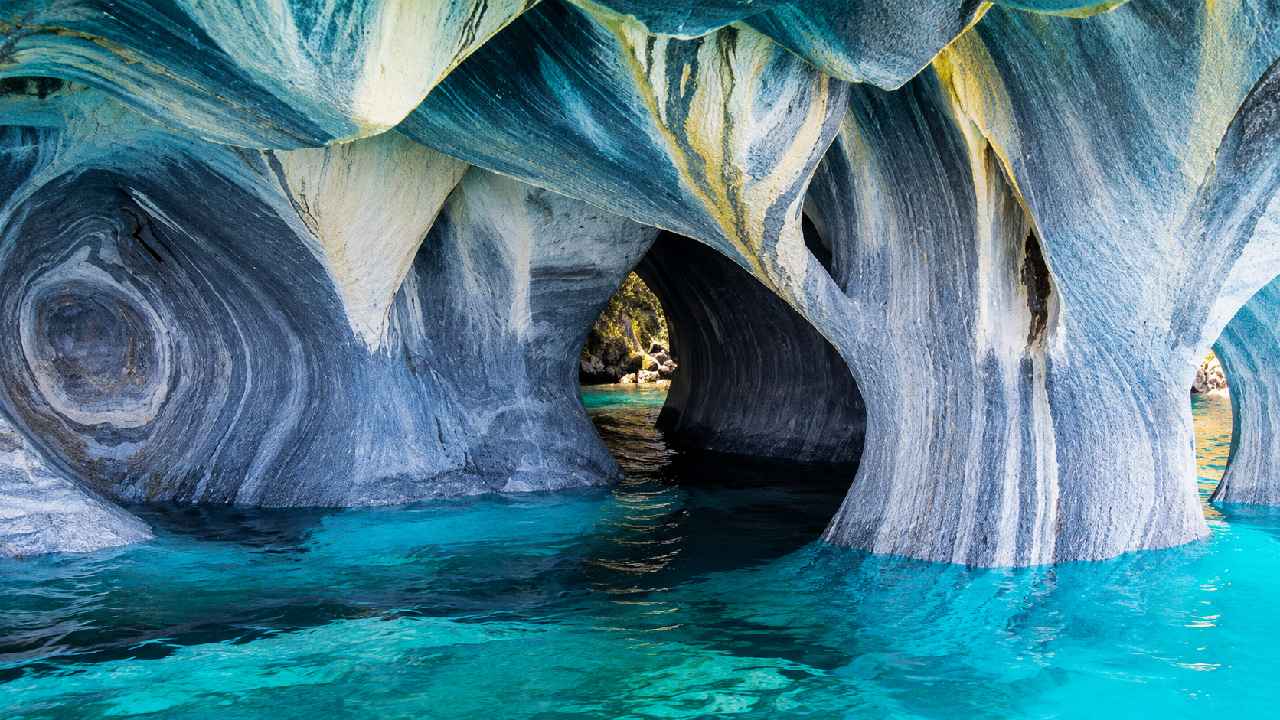
Trans to Find – The Marble Caves rise from the turquoise waters of General Carrera Lake in Chilean Patagonia. Their curved walls, blue reflections, and polished stone make the landscape look digitally created. However, every arch and narrow passage is natural. Water, wind, and time shaped the marble into an extraordinary network of chambers. Sunlight then reflects the lake’s color onto the pale rock. As a result, the interior can appear blue, silver, green, or gray. The effect changes throughout the day and across the seasons. In my view, this constant transformation makes the caves more captivating than a static monument. Visitors do not simply observe one famous view. Instead, they experience a living landscape that changes with weather, light, and water. Chile’s official tourism site identifies the formations as a major attraction on General Carrera Lake, the country’s largest lake.
A Remote Location Adds to Their Otherworldly Character
The caves sit along General Carrera Lake in Chile’s Aysén Region. This remote area forms part of northern Chilean Patagonia and lies near the border with Argentina. Although the lake stretches across both countries, the best-known marble formations stand on the Chilean side. Puerto Río Tranquilo serves as the main base for travelers. The small settlement lies along the Carretera Austral, one of Chile’s most scenic and adventurous roads. Therefore, reaching the destination requires more planning than visiting a typical city attraction. Long road journeys, changing weather, and limited transport remain part of the experience. Yet the remote setting also protects the atmosphere. Mountains, glaciers, forests, and open water surround the area. Modern buildings rarely interrupt the view. Consequently, the approach feels like a journey deeper into nature rather than a simple transfer between tourist sites.
Ancient Marble Forms the Foundation of the Landscape
Marble begins as limestone that changes under intense heat and pressure. During this process, its carbonate minerals recrystallize and create a dense metamorphic rock. The material can contain veins, color variations, and mineral patterns. These details become especially visible after water polishes the surface. At General Carrera Lake, the exposed marble displays flowing bands of white, gray, blue, and occasional golden tones. However, the stone itself does not always appear intensely blue. Much of that color comes from reflected lake water and changing daylight. This distinction matters because it explains why photographs taken at different times can look dramatically different. Some images show bright turquoise interiors. Others reveal darker gray chambers with subtle patterns. Therefore, visitors should expect a natural environment rather than one fixed postcard appearance.
Read Also: Inside the Mystical Ssese Islands, Africa’s Hidden Paradise on Lake Victoria
Water Slowly Sculpted the Marble Caves
The Marble Caves developed through long-term erosion along the lake’s edge. Repeated waves moved against the rock and gradually widened cracks. Over time, water carved openings, tunnels, pillars, and smooth chambers. Changes in lake level also allowed erosion to act at different heights. That process helped create layered curves across the walls. Unlike caves formed only through underground dissolution, these formations remain closely connected to open lake water. Their entrances sit directly above or beside the surface. Consequently, boats and kayaks can approach the rock from outside and move through accessible passages when conditions permit. The result resembles an architectural complex, although no human designer planned it. Rounded columns appear to support ceilings, while narrow openings frame the lake beyond. This natural geometry explains why visitors often compare the site with a palace or cathedral.
The Marble Cathedral Is the Most Iconic Formation
The attraction includes several named formations. The most famous is the Marble Cathedral, or Catedral de Mármol. Its broad mass and dramatic openings give it a monumental appearance. Nearby stands the Marble Chapel, known as Capilla de Mármol. Smaller caverns and arches surround both landmarks. Together, these features form the wider Marble Caves natural sanctuary. The names reflect their shapes rather than religious use. When seen from the water, the isolated formations resemble ornate buildings resting on stone bases. Inside, high curves and reflected light strengthen that impression. However, access varies with waves and water levels. A boat may circle the major formations, while a kayak may enter narrower areas during calm conditions. Therefore, every tour can offer a slightly different route. Official tourism information presents the Marble Chapel and Cathedral as defining highlights of General Carrera Lake.
General Carrera Lake Creates the Famous Blue Reflections
General Carrera Lake covers approximately 1,850 square kilometers, making it Chile’s largest lake. Its glacial setting contributes to its vivid turquoise appearance. Fine suspended material and changing light influence how the water reflects blue and green tones. These colors then bounce onto the pale marble walls. Consequently, the stone seems to glow from within. On a bright day, the lower walls can display intense blue patterns. Meanwhile, shadowed ceilings may remain silver or charcoal gray. Wind also changes the visual effect. Calm water creates smoother reflections, while waves break the colors into moving patterns. For photographers, this means no two moments look identical. Still, bright sun does not automatically guarantee the best experience. The angle of the light, the lake level, and the position of the boat all shape the result.
Puerto Río Tranquilo Serves as the Main Gateway
Most visits begin in Puerto Río Tranquilo. Tour operators in the village organize boat and kayak excursions across the lake. Travelers usually book locally or reserve ahead during the busiest months. Because the formations stand beside open water, visitors cannot simply walk into the main caves from shore. A guided water journey is necessary. Boat tours suit travelers who prefer a more comfortable and stable ride. In contrast, kayaking creates a closer connection with the rock and water. Paddlers may enter smaller passages when the lake remains calm. However, kayaking requires more physical effort and depends heavily on wind conditions. Boat trips can also face cancellations when the weather becomes unsafe. Therefore, a flexible itinerary is valuable. Travelers who schedule only a few hours in the area may miss the caves if strong winds arrive.
Boat and Kayak Tours Offer Different Experiences
A motorboat covers the distance efficiently and allows passengers to focus on the scenery. It can also feel more suitable for families or travelers with limited mobility. However, engine noise and group size may reduce the sense of silence. Kayaking offers a slower and more immersive approach. The paddle moves quietly through the water, while the lower viewpoint reveals reflections close to the surface. Still, safety must come first. Patagonia’s weather can change quickly, and wind can make the lake rough. Life jackets and instructions from local guides remain essential. Beginners should honestly assess their comfort on open water. In my opinion, neither option is automatically better. The ideal choice depends on fitness, weather, available time, and the type of experience desired. A well-run boat tour can be memorable, while a calm kayak journey may feel more intimate.
Summer Brings the Most Reliable Visiting Conditions
The main travel season generally runs through the Southern Hemisphere’s warmer months. December to March often brings longer daylight and a better chance of manageable conditions. However, Patagonia remains unpredictable even in summer. Wind, rain, and sudden temperature changes can still interrupt tours. Some updated travel guidance suggests that conditions may be favorable from October through April, with the busiest season beginning around December. Therefore, travelers should pack layers and avoid relying on one perfect weather forecast. Staying at least one extra day near Puerto Río Tranquilo creates a useful buffer. Morning departures may also offer calmer water, although local guides should make the final safety decision.
Light and Water Levels Transform the Appearance
The Marble Caves never display exactly the same colors. During periods of higher water, boats may reach different sections of the formations. During lower water, more marble can become visible above the surface. Meanwhile, sunlight changes the intensity and direction of reflected color. Bright conditions can create vivid turquoise tones. Cloud cover may produce softer silver and blue shades. This variation is not a flaw. Instead, it is one of the destination’s defining qualities. Travelers should avoid expecting every photograph to match popular edited images online. The caves may appear darker, more textured, or more subdued in person. Yet that natural unpredictability often makes the experience feel more genuine. A camera captures only one fraction of the movement. The sound of water, scale of the stone, and shifting reflections are difficult to reproduce in a single image.
The Carretera Austral Makes the Journey Part of the Story
For many visitors, reaching Puerto Río Tranquilo becomes an adventure of its own. The Carretera Austral runs through forests, valleys, fjords, rivers, and mountain landscapes. Some sections remain rugged, while travel times can be longer than expected. Fuel, accommodation, and food options also become more limited outside larger settlements. Therefore, careful planning is important. Drivers should check road conditions and avoid overly ambitious daily distances. Bus services may connect some towns, although schedules can vary. Despite these challenges, the route delivers a deeper view of Patagonia. The caves become one highlight within a broader landscape rather than an isolated attraction. Recent reporting has also noted that tourism around Puerto Río Tranquilo has grown significantly as more travelers explore the highway and its natural landmarks.
Responsible Travel Helps Protect the Sanctuary
Growing popularity creates both opportunities and pressure. Tourism supports guides, accommodation owners, restaurants, and transport providers. However, increased boat traffic may affect the quiet character of the lake. Visitors should therefore choose responsible operators and follow local safety rules. They should avoid touching, climbing, or marking the marble. Even small actions can damage natural surfaces or encourage others to behave carelessly. Waste should return to shore, while wildlife must remain undisturbed. In addition, travelers can support the community by using locally operated services. Responsible tourism does not mean avoiding famous places. Instead, it means reducing unnecessary impact while recognizing that the destination is also home to local residents. The growth of tourism in Puerto Río Tranquilo makes this balance increasingly important.
Practical Preparation Creates a Better Visit
Travelers should bring windproof layers, sun protection, secure footwear, and a waterproof bag. Even on a clear day, spray can reach passengers inside a small boat. Cameras and phones need protection from water. Meanwhile, sunglasses help reduce glare from the lake. Motion-sensitive travelers may also want suitable medication after consulting a healthcare professional. Cash can be useful because payment systems may not always work reliably in remote areas. Most importantly, visitors should listen to local guides. A canceled departure may feel disappointing, yet unsafe lake conditions can develop quickly. Building flexibility into the schedule reduces frustration. It also makes the journey more enjoyable because every hour does not depend on one fixed plan.
Marble Caves Reward Travelers Who Accept Uncertainty
The Marble Caves are unforgettable partly because they cannot be fully controlled. Weather shapes the journey, water determines access, and sunlight changes the colors. This uncertainty separates the destination from a carefully managed indoor attraction. Visitors must respond to the landscape rather than expecting the landscape to follow a schedule. Those who arrive with patience often gain the richest experience. They see not only polished marble, but also the wider character of Patagonia. The long road, shifting wind, small lakeside village, and sudden bursts of blue light all become part of the story. For travelers who value geology, photography, or remote adventure, the caves offer something rare: a real place that still looks impossible.