Travel
Famous Landmarks In France, French Monarchy History, French Royal Palace, Hall Of Mirrors, Historic Palace Of France, Palace Of Versailles, Royal Architecture Europe, Trans to Find, Traveling, UNESCO World Heritage France, Versailles Gardens, Versailles Palace France, Versailles Tourism
transtofind
Palace of Versailles, The Magnificent Royal Palace and Historic Icon of France
Trans to Find – Palace of Versailles stands as one of the most extraordinary historical landmarks in Europe. Located just outside Paris, this royal residence reflects the power, ambition, and artistic vision of the French monarchy during its most influential era. From the moment visitors arrive at the golden gates, the palace immediately conveys a sense of grandeur that few historical sites can match. Moreover, the sheer scale of the architecture and gardens reveals how deeply symbolism was embedded in royal design. Today, the Palace of Versailles attracts millions of visitors every year. While many travelers come to admire its beauty, others are drawn by the fascinating stories that unfolded within its walls. In many ways, Versailles is not simply a palace; it is a living narrative of France’s political and cultural transformation. Consequently, the site continues to captivate historians, architects, and travelers alike.
The Vision of King Louis XIV and the Birth of Versailles
The Palace of Versailles began as a modest hunting lodge built by King Louis XIII. However, when his son Louis XIV ascended the throne, the site underwent a dramatic transformation. The young king envisioned a palace that would symbolize absolute power and royal prestige. Therefore, he ordered architects, artists, and landscape designers to expand the estate into an unparalleled royal complex. As construction progressed, Versailles became more than a royal residence. It evolved into the center of French political life. In fact, Louis XIV moved the royal court and government to Versailles in 1682. Because of this decision, the palace soon became the heart of power in France. Furthermore, the king used the grandeur of Versailles to reinforce his authority, ensuring that nobles remained close to the court and under his influence.
“Read Also: Why Pluto Is the Planet We Need Right Now“
Architectural Grandeur That Defined an Era
The architectural beauty of the Palace of Versailles is one of its most defining features. Designed with classical symmetry and lavish decoration, the palace reflects the artistic ideals of the French Baroque style. Gold accents, intricate carvings, and monumental columns create a sense of luxury that still impresses modern visitors. Equally important is the scale of the structure itself. With more than 2,000 rooms, the palace complex stretches across an enormous area. As a result, exploring Versailles often feels like stepping into a city dedicated entirely to royal life. Interestingly, the design was not purely decorative. Instead, every architectural element was carefully planned to convey strength, order, and royal authority.
The Hall of Mirrors and Its Global Historical Importance
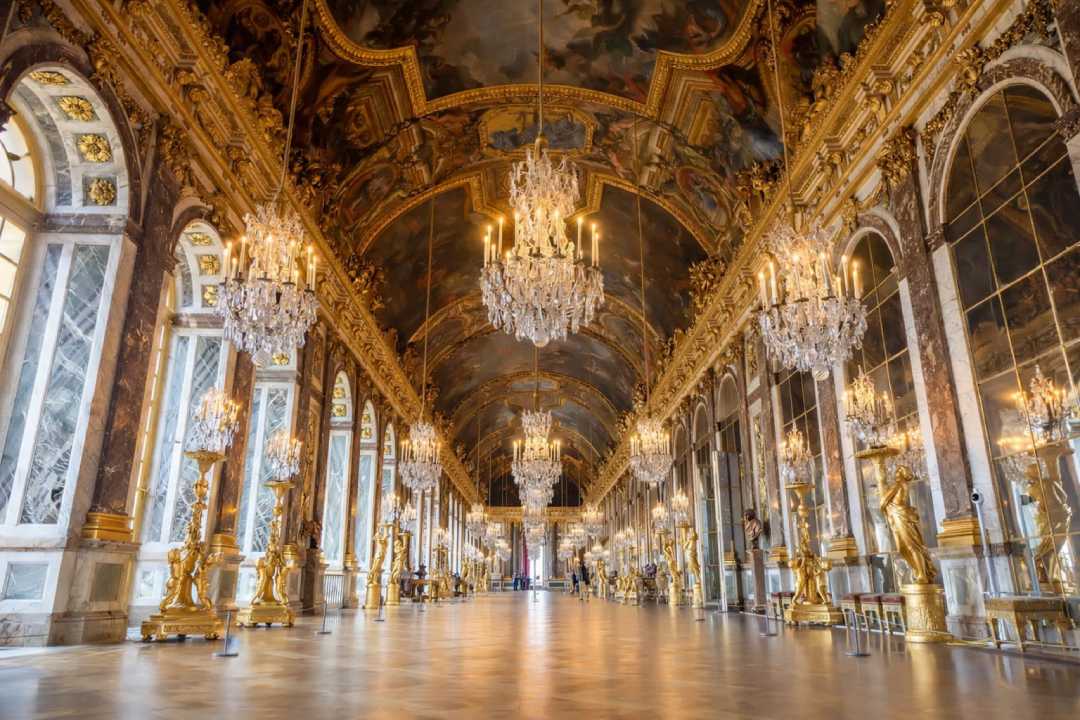
Among the many spectacular rooms within the Palace of Versailles, the Hall of Mirrors remains the most famous. This grand gallery stretches across the palace with 357 mirrors reflecting sunlight from the garden-facing windows. Consequently, the room creates a dazzling visual effect that symbolizes the wealth and elegance of the French court. Beyond its beauty, the Hall of Mirrors also played a major role in world history. In 1919, the Treaty of Versailles was signed here, formally ending the First World War. Because of this event, the hall carries historical significance far beyond France. Today, visitors walking through the gallery often sense the powerful historical moments that once shaped the world.
The Magnificent Gardens of Versailles
While the palace itself is impressive, the gardens of the Palace of Versailles are equally remarkable. Designed by landscape architect André Le Nôtre, the gardens represent one of the finest examples of formal French garden design. Long pathways, geometric flower beds, and grand fountains form a landscape that feels both artistic and perfectly controlled. Moreover, the gardens extend across nearly 800 hectares, making them one of the largest palace gardens in Europe. Because of their size and symmetry, visitors often spend hours exploring the fountains, sculptures, and hidden groves. In addition, seasonal fountain shows bring the gardens to life, recreating the spectacle once enjoyed by the royal court.
Versailles as a Symbol of Royal Power
The Palace of Versailles was not merely built for comfort or luxury. Instead, it served as a powerful political tool. Louis XIV intentionally designed the palace to demonstrate the absolute authority of the monarchy. By surrounding himself with elaborate rituals and opulent surroundings, he reinforced the image of a king whose power appeared almost divine. Furthermore, the palace created a controlled environment for the French nobility. By inviting nobles to reside at Versailles, Louis XIV kept them close to the royal court. Consequently, the monarchy maintained political stability while projecting an image of unity and grandeur. In this sense, Versailles functioned both as a residence and a strategic center of governance.
Versailles Through Revolution and Modern Transformation
The Palace of Versailles did not remain untouched by the dramatic events of French history. During the French Revolution in 1789, the royal family was forced to leave the palace and return to Paris. As a result, Versailles lost its role as the royal residence. However, the palace eventually found a new purpose. In the 19th century, it was transformed into a museum dedicated to French history. This change allowed the palace to preserve its heritage while opening its doors to the public. Today, Versailles continues to evolve as a cultural institution that celebrates art, architecture, and national history.
Why Palace of Versailles Remains a Global Attraction
In the modern era, the Palace of Versailles remains one of the most visited historical sites in the world. Millions of travelers come each year to experience its beauty firsthand. Yet the appeal of Versailles goes beyond visual splendor. Instead, the palace offers a rare opportunity to understand the social and political forces that shaped European history. Additionally, Versailles represents the timeless intersection of art, power, and storytelling. Walking through its halls often feels like stepping into a living museum where every room reveals another chapter of history. Because of this unique combination of architecture, culture, and narrative, the Palace of Versailles continues to inspire curiosity and admiration across generations.