Lake Tekapo Turns Dreamlike When Colorful Lupins Begin to Bloom
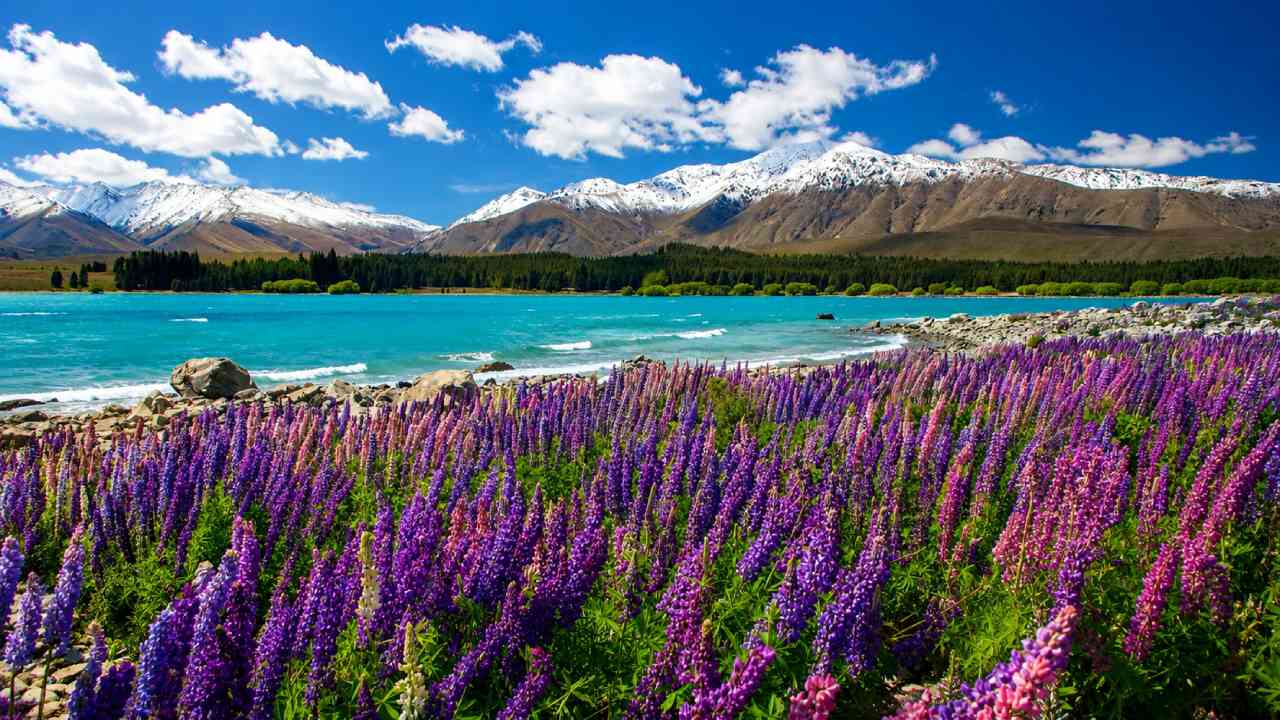
Trans to Find – Lake Tekapo already looks remarkable with its turquoise water and wide alpine scenery. However, the landscape becomes even more colorful when lupins begin to bloom. Pink, purple, blue, and white flowers can spread across parts of the surrounding landscape. As a result, the contrast with the blue lake can look almost unreal. Lake Tekapo sits in New Zealand’s South Island, within the Mackenzie region. The destination changes noticeably with the seasons. Spring brings fresh color, while summer offers longer days for exploring the area. New Zealand’s official tourism site specifically highlights photographing lupin fields in spring as one of Tekapo’s seasonal attractions. For travelers, this combination creates an unusual experience. Mountains rise beyond the water, flowers fill parts of the foreground, and open skies make everything feel larger. It is easy to understand why photographs from Tekapo can resemble carefully created landscape art.
Colorful Lupins Create the Famous Fairytale View
The lupins are one of the most recognizable features in seasonal photographs of Lake Tekapo. Their tall flower spikes introduce bold colors into an otherwise cool-toned alpine landscape. Purple is especially common, although visitors may also encounter pink, blue, and lighter shades. From a photography perspective, the flowers create natural layers. Lupins can fill the foreground while turquoise water and mountains form the background. Therefore, even a simple photograph can gain remarkable depth. The flowers also change the mood of the destination. Without them, Tekapo has a peaceful and dramatic alpine character. During blooming periods, the same scenery can feel softer and more romantic. However, visitors should remember that flowering conditions vary. Weather, location, and seasonal timing can influence what they actually see. The spectacular fields shown online should inspire a visit rather than become a guarantee of identical conditions.
The Turquoise Water Makes the Colors More Dramatic
Flowers alone do not create the distinctive appearance of Lake Tekapo. The lake itself provides an equally important part of the visual experience. Tekapo is a glacial lake, and its water can display a striking blue or turquoise appearance. Fine sediment created by glacial activity helps produce this characteristic color. When sunlight reaches the water, the landscape can appear exceptionally bright. Consequently, blooming lupins create an even stronger contrast beside the lake. Pink and purple flowers stand against turquoise water, while distant mountains complete the scene. Few landscapes combine these colors so naturally. Moreover, the appearance can change throughout the day. Morning light may produce softer tones, while brighter daylight can intensify the blue water. Clouds can also transform the atmosphere within minutes. This changing light means Tekapo never looks exactly the same for long. For photographers, that unpredictability is part of its appeal.
Read Also: Why People Keep Entering New York’s Underground Sewer Network
The Most Beautiful Season Requires Flexible Expectations
Travelers hoping to see lupins should plan carefully, yet they should also remain flexible. Flowering is a natural event rather than a fixed attraction with an exact opening date. Conditions can shift between years because temperature and weather affect plant development. New Zealand tourism information highlights lupins as part of Tekapo’s spring scenery. However, visitors should check current local conditions before building an entire journey around the flowers. This approach can prevent disappointment. Fortunately, Lake Tekapo remains visually impressive even when the lupins are not at their peak. The turquoise lake, mountain views, walking opportunities, and clear night skies provide plenty to experience. In my view, that makes Tekapo stronger than destinations built around only one seasonal attraction. The flowers enhance the landscape rather than define its entire value. Travelers who arrive with that perspective can enjoy the region regardless of minor seasonal differences.
The Beautiful Lupins Have a Complicated Ecological Story
There is an unexpected side to those famous flower fields. Russell lupins are introduced plants rather than native New Zealand wildflowers. In parts of the upper Waitaki Basin, conservation authorities consider them an environmental weed. New Zealand’s Department of Conservation lists Russell lupin among weeds of concern in braided rivers and wetlands. The plants can alter habitats used by native wildlife. Therefore, the same flowers admired in travel photographs can create ecological challenges. This contrast makes the story of Lake Tekapo more interesting than a simple description of a beautiful destination. Travelers can appreciate the visual appeal while understanding the environmental context. Most importantly, visitors should avoid collecting seeds or deliberately spreading the plants. Attractive scenery does not always mean every element belongs naturally within an ecosystem. That distinction adds depth to the destination and encourages more responsible travel.
Lake Tekapo Offers More Than a Seasonal Flower Display
Although the lupins attract photographers, Lake Tekapo remains a year-round destination. The surrounding Mackenzie region offers broad alpine landscapes and access to numerous outdoor experiences. Visitors can enjoy scenic walks, relax near the waterfront, or simply watch changing light across the lake. During colder months, snow can transform the nearby mountains. Meanwhile, warmer seasons provide longer daylight hours for exploring. This seasonal variety gives travelers several reasons to return. Someone visiting for flowers may discover that the wider landscape becomes equally memorable. In fact, the open terrain is one of Tekapo’s strongest features. There are fewer visual distractions than in crowded urban destinations. Instead, water, mountains, sky, and vegetation dominate the view. This simplicity creates the feeling of space that appears so clearly in photographs. Therefore, Tekapo does not need elaborate attractions to make an impression. Its landscape already provides the main experience.
The Church of the Good Shepherd Adds a Human Touch
One of the best-known landmarks beside Lake Tekapo is the Church of the Good Shepherd. The small stone church sits close to the lakeshore and has become strongly associated with photographs of the destination. Its modest scale works particularly well against the enormous surrounding landscape. Rather than competing with the mountains, the building adds a quiet human element to the scene. Visitors often include it while exploring the lakefront. During colorful seasons, flowers can add another layer to views around the wider Tekapo area. However, respectful behavior remains important because the church is more than a photography prop. Its historical and cultural role deserves the same attention as its picturesque setting. This balance between natural scenery and a recognizable landmark helps give Tekapo its distinctive identity. Travelers can experience an impressive landscape while still encountering traces of local history and community.
After Sunset Lake Tekapo Reveals Another World
The flowers may dominate daytime photographs, but darkness brings another reason to visit Lake Tekapo. The area lies within the Aoraki Mackenzie International Dark Sky Reserve. Stargazing experiences operate here because the region offers exceptionally dark skies. On clear nights, visitors can observe a sky that feels dramatically different from those above brightly illuminated cities. Stars become more prominent, while the Milky Way can create spectacular conditions for night photography. This creates an appealing contrast within a single trip. During daylight, travelers can photograph turquoise water and colorful lupins. After sunset, the attention moves upward toward stars, planets, and the wider southern sky. In favorable conditions, the region can also offer opportunities to observe the Aurora Australis. However, aurora visibility is never guaranteed. New Zealand tourism guidance notes that darker months from March through September generally provide stronger viewing conditions.
Responsible Travel Helps Protect the Tekapo Landscape
Beautiful destinations often face pressure when their photographs become popular online. Lake Tekapo is no exception. Visitors searching for the perfect flower photograph should avoid damaging vegetation or sensitive landscapes. Staying on appropriate access routes is a simple but valuable habit. Furthermore, travelers should never spread lupin seeds to create new photo locations. Russell lupin is already recognized as a conservation concern in parts of the region. Responsible photography also means accepting that nature does not always produce the perfect composition. Flowers may be thinner than expected, clouds may cover the mountains, or wind may disturb the lake. Nevertheless, those variations are part of visiting a real landscape. The goal should be experiencing Tekapo rather than reproducing an image seen on social media. This mindset protects the environment while making the journey feel more authentic.
Lake Tekapo Feels Like Nature Created Its Own Painting
What makes Lake Tekapo memorable is not one isolated feature. Instead, several natural elements come together in a remarkably photogenic setting. Turquoise water provides the foundation. Mountains create a dramatic horizon, while colorful lupins introduce seasonal contrast. Then, after daylight disappears, dark skies completely change the character of the destination. Few places offer such different visual experiences within the same landscape. Yet the ecological story behind the lupins also reminds visitors that beauty can be complicated. These flowers may look magical, but they are introduced plants with environmental consequences in sensitive habitats. That fact does not make Tekapo less fascinating. Instead, it makes the destination more meaningful to understand. For travelers who appreciate landscapes, photography, flowers, and night skies, Lake Tekapo offers far more than a beautiful social media backdrop. At the right moment, however, those colorful blooms can certainly make the lakeshore look like a scene from a dream.