Katakombe, Paris Most Mysterious Underground Labyrinth
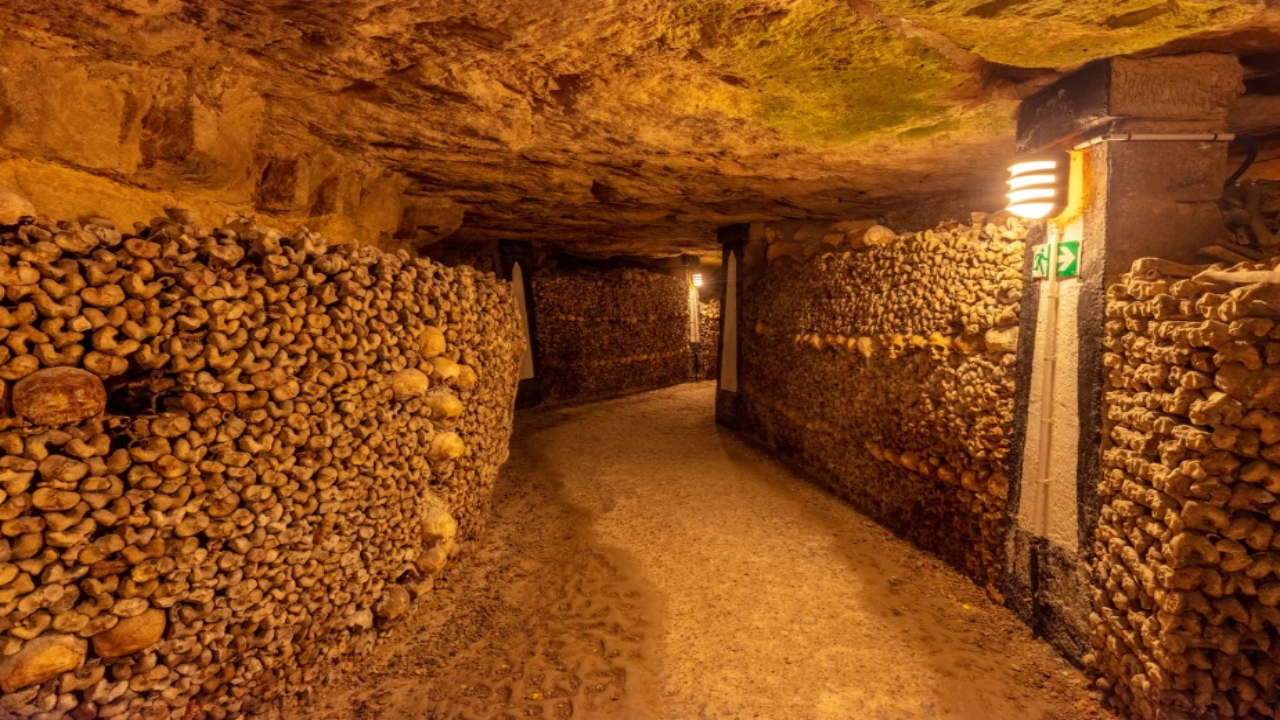
Trans to Find – The Katakombe began as a desperate solution for a growing public health problem in 18th-century Paris. Cemeteries were full, and many collapsed under the weight of overcrowding. As a result, authorities moved millions of human remains into abandoned limestone quarries beneath the city. The relocation created walls of bones arranged in patterns that still unsettle visitors today. Although the work was practical, it also revealed the vulnerability of the city during that era. Moreover, the underground chambers gradually transformed into a powerful reminder of mortality and urban resilience.
“Read also: Why Papua New Guinea Is Considered Unsafe for Tourists“
Why the Katakombe Continues to Fascinate Modern Travelers
Many travelers feel drawn to the Katakombe because of its sharp contrast with the lively Paris above. Bright boulevards fade into silent tunnels lined with skulls and femurs. This shift in atmosphere creates a sense of suspended time. Visitors often describe the experience as eerie yet strangely peaceful. Additionally, the narrow corridors encourage people to reflect on how close the past truly sits beneath the present. Curiosity only grows because very few areas are open to the public.
The Forbidden 170-Mile Maze and Its Hidden Dangers
Only a small part of the Katakombe is accessible. The rest remains locked away due to significant risks. Deep inside, the tunnels twist into a 170-mile maze with uneven floors, unstable ceilings, and no natural light. Because of this, explorers who enter illegally face real danger. Some lose their way within minutes. Others require emergency rescue. The French government keeps these areas closed to protect both visitors and the fragile historical structure. The mystery surrounding these forbidden passages adds intensity to the Katakombe’s reputation.
The People Behind the Bones of the Katakombe
Every skull in the Katakombe once belonged to someone with a story. The remains came from all layers of Parisian society. Many belonged to victims of disease, poverty, or overcrowded burial grounds. Others arrived during the French Revolution. Although the identities have faded, the presence of these bones creates a powerful emotional weight. Their silent arrangement reflects the city’s shared past and the universal certainty of death. The Katakombe therefore stands as both a monument and a memorial.
“Read also: Walking Into Angola’s Past: Inside the Slavery Museum That Honors Pain, Memory, and Resistance“
How the Katakombe Influences Global Imagination and Pop Culture
Writers, filmmakers, and artists often use the Katakombe as a symbol of mystery and fear. Its dark tunnels provide an atmosphere no studio can imitate. Several horror films have used the site to heighten tension. Additionally, urban legends about lost explorers continue to circulate online. These stories keep the Katakombe in public conversation. Even illegal artists contribute graffiti and sculptures, leaving traces of modern life in a space dominated by the dead.
Science, Preservation, and the Study
Researchers continue to learn from the Katakombe. Geologists study the limestone patterns to understand ancient mining methods. Anthropologists analyze bone layers to reconstruct demographic details about old Paris. Meanwhile, preservation teams monitor humidity and structural shifts to prevent collapse. Thanks to digital mapping projects, experts also create safer and more accurate models of the underground layout. These efforts help protect the Katakombe for future generations and deepen global understanding of its value.
The Emotional Experience of Standing Inside the Katakombe
Visitors frequently describe a wave of emotion when they descend into the Katakombe. Silence fills the narrow tunnels, and the sight of stacked bones removes any sense of distance from the past. Although the atmosphere feels heavy, many travelers also find clarity there. The contrast between vibrant Paris and this quiet world below encourages reflection. The experience leaves a lasting impression because it forces people to confront the meaning of time, loss, and memory.
Why the Katakombe Remains One of the World’s Most Intriguing Sites
The Katakombe continues to attract attention because it holds history, mystery, and emotion in one place. Although only a fraction is open, its impact feels enormous. The rest of the labyrinth fuels imagination and reminds visitors that some mysteries are better preserved than explored. Paris may shine on the surface, but beneath it lies a world that reveals the city’s deeper and darker truths. For that reason, the Katakombe remains one of the most unforgettable destinations in the world.