Discover Deadvlei, Namibia’s Mysterious Desert of Ancient Dead Trees
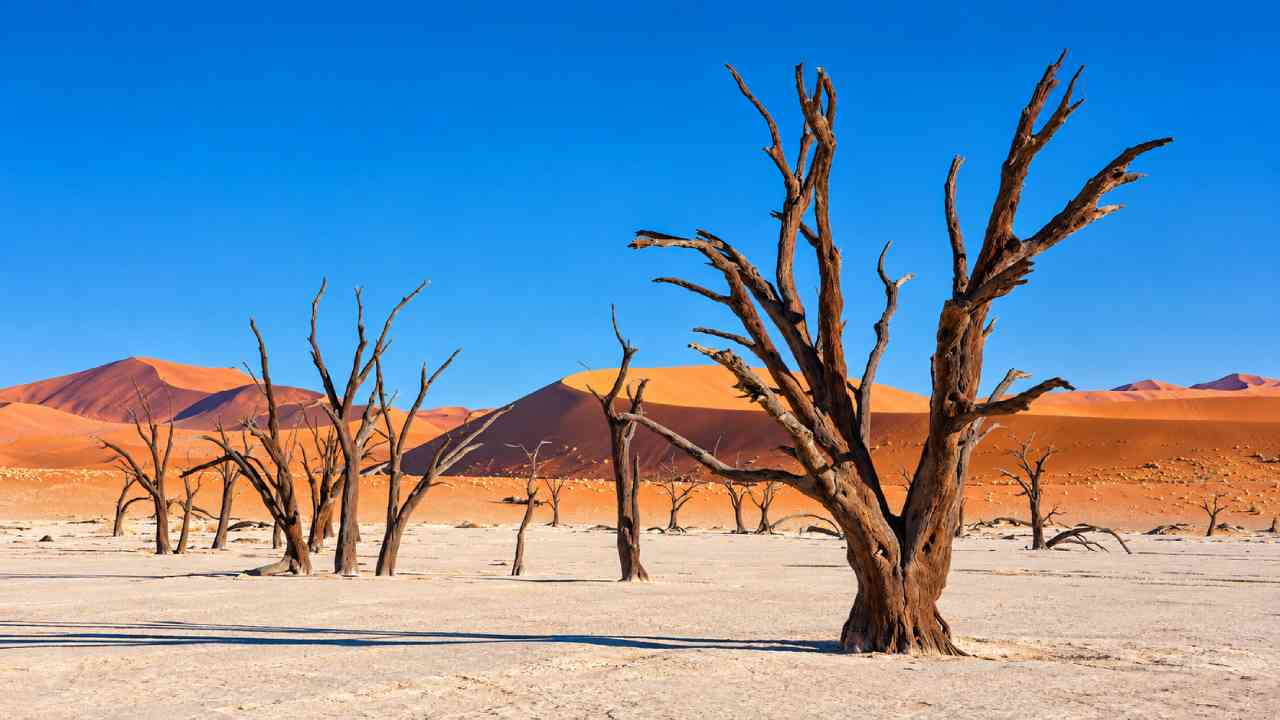
Trans to Find – Discover Deadvlei and you may wonder whether the landscape in front of you is real. Hidden within Namibia’s Namib Desert, this remarkable clay pan creates one of Africa’s most unusual travel scenes. Pale ground stretches beneath ancient dead trees, while enormous orange-red dunes rise behind them. Meanwhile, a deep blue sky adds another layer of contrast. As a result, the entire landscape can resemble a carefully edited photograph rather than a natural destination. However, Deadvlei’s beauty comes directly from nature. Travelers arrive here for photography, desert adventures, and the rare feeling of standing somewhere almost untouched by time. Moreover, the silence makes the experience surprisingly powerful. There are no crowded city streets or towering buildings nearby. Instead, visitors find open space, dramatic colors, and an ancient landscape shaped by an unforgiving climate. For adventurous travelers, Deadvlei offers a memorable introduction to Namibia’s extraordinary desert environment.
Where Deadvlei Is Located in Namibia
Deadvlei lies near Sossusvlei in the Namib-Naukluft National Park area of Namibia. The destination sits among some of the towering dunes for which this part of the Namib is famous. Travelers commonly reach the region through Sesriem, which serves as a gateway for exploring Sossusvlei and the surrounding desert attractions. From there, the journey continues deeper into a landscape dominated by sand, open skies, and dramatic geological formations. Although Deadvlei often appears isolated in photographs, it forms part of a broader desert experience. Nearby attractions make it possible to spend more time exploring the area rather than visiting only one location. Furthermore, the journey itself becomes part of the adventure. Colors gradually change as sunlight moves across the dunes. At the same time, the scale of the landscape becomes increasingly apparent. Therefore, reaching Deadvlei feels less like arriving at a conventional tourist attraction and more like entering a remote natural world.
Ancient Dead Trees Create an Unforgettable Landscape
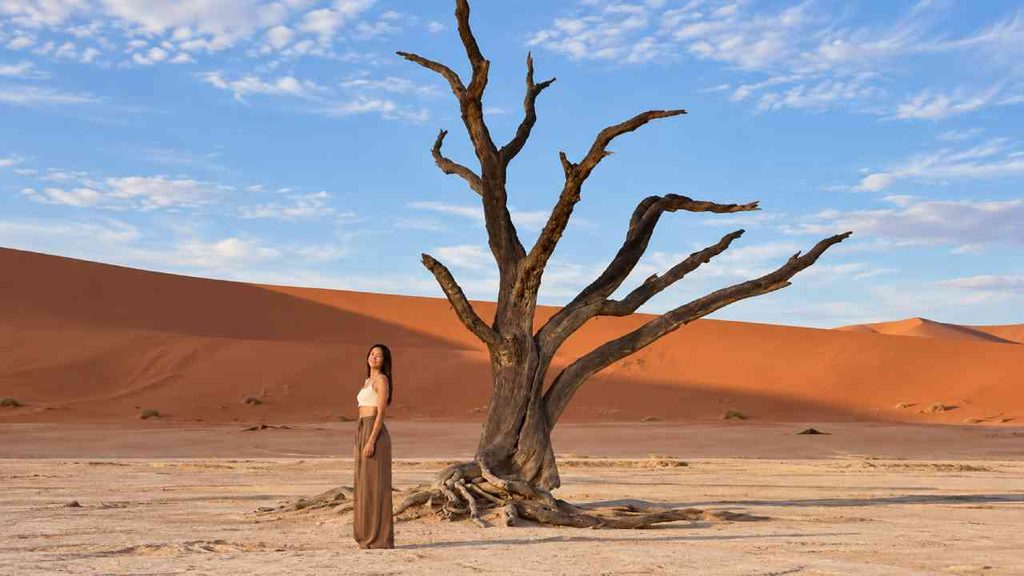
The dead camel thorn trees are the defining feature of Deadvlei. Long ago, water reached this clay pan and supported vegetation in an otherwise harsh desert environment. Eventually, however, changing conditions left the area extremely dry. The trees died, yet many of their dark trunks remained standing. Because the climate has so little moisture, decomposition occurs very slowly. Consequently, these skeletal trees have survived for centuries as natural monuments to an earlier landscape. Their dark forms now create a striking contrast against the pale clay floor. Meanwhile, the surrounding dunes provide warm shades of orange and red. This combination explains why Deadvlei has become a dream destination for landscape photographers. Yet photographs reveal only part of its appeal. Standing beside the trees gives visitors a clearer sense of their isolation and age. In my view, this contrast between fragility and endurance is what gives Deadvlei much of its emotional power.
Read Also: Argentina vs Burkina Faso Prediction: Messi Remains a Question Mark
Why the Deadvlei Landscape Looks Almost Unreal
Few destinations use such a limited range of colors to create such a dramatic scene. Deadvlei combines pale clay, dark trees, red dunes, and an intensely blue sky. Therefore, photographs often appear highly stylized even without heavy editing. The flat clay pan also makes each tree stand apart from its surroundings. As sunlight shifts, long shadows stretch across the ground and change the character of the landscape. Early morning can create softer tones, while stronger daylight produces sharper contrasts. Moreover, the absence of dense vegetation removes many visual distractions. Every branch, crack, and dune becomes easier to notice. This simplicity gives Deadvlei its otherworldly character. Unlike lush tropical destinations, its beauty comes from emptiness. Nevertheless, the landscape never feels visually dull. Instead, the desert continually changes with light, shadow, wind, and perspective. That unusual combination makes discovering Deadvlei feel like walking through a living piece of surrealist art.
Big Daddy Adds Adventure to the Deadvlei Journey
Travelers seeking more than photography can combine Deadvlei with a climb through the surrounding dunes. Big Daddy is one of the best-known dunes near the clay pan and offers an impressive desert challenge. Walking on loose sand requires more effort than hiking on solid ground. However, the higher you climb, the wider the surrounding landscape becomes. From elevated viewpoints, visitors can appreciate the extraordinary scale of the Namib Desert. Ridges of sand seem to continue toward the horizon, while Deadvlei appears dramatically small below. Furthermore, descending the dune can become one of the most memorable parts of the journey. Some travelers head down the steep sandy slope toward the clay pan after reaching higher sections. Still, visitors should consider temperature, fitness, and water before attempting a demanding climb. Desert conditions can become difficult quickly. Therefore, preparation matters. Combining a dune hike with Deadvlei can turn a sightseeing stop into a much richer outdoor adventure.
The Best Time to Experience Deadvlei
Timing can dramatically influence a visit to Deadvlei. Many travelers prefer the morning because desert temperatures are generally more comfortable before the strongest daytime heat arrives. In addition, lower sunlight creates long shadows around the dead trees. These shadows add depth and texture to photographs. Photographers may also appreciate the changing colors on the dunes as the sun rises higher. However, visitors should remember that this is an exposed desert environment. Shade is extremely limited, and conditions can become uncomfortable during hotter periods. Therefore, carrying enough drinking water and using suitable sun protection are sensible precautions. Comfortable footwear is also useful because exploring the area involves walking over sand and hard clay surfaces. Most importantly, travelers should allow enough time to experience the landscape without rushing. Deadvlei rewards slow observation. As the light changes, the same tree can produce an entirely different composition. That makes patience surprisingly valuable when exploring this remarkable destination.
Photography at Deadvlei Rewards Patience and Perspective
Deadvlei is naturally photogenic, but thoughtful composition can make the experience even more rewarding. Instead of photographing only the famous dead trees, travelers can experiment with shadows, cracked clay, dune ridges, and wider desert views. For example, positioning a dark tree against a brightly illuminated dune creates a striking natural contrast. Meanwhile, wider compositions can show how small the trees appear within the surrounding landscape. Changing position by only a few meters may also transform the background completely. Therefore, exploring different angles is often more useful than staying in one popular photography spot. At the same time, visitors should avoid focusing entirely on their cameras. Deadvlei is unusually quiet, and that silence forms an important part of the experience. Take a moment to look across the clay pan without a screen. For many travelers, those quiet observations become just as memorable as the photographs they eventually take home.
Responsible Travel Helps Protect This Fragile Desert
Although Deadvlei appears tough and timeless, desert environments can be surprisingly fragile. Responsible travel is therefore essential when exploring the area. Visitors should follow designated access rules and respect guidance from local authorities or park staff. Furthermore, travelers should avoid damaging trees or disturbing natural features for the sake of a photograph. Even a small action can affect a landscape that changes extremely slowly. Carrying waste away is equally important because litter can remain visible in an open desert environment for a long time. In addition, visitors should prepare properly before entering remote areas. Water, sun protection, suitable clothing, and awareness of weather conditions can make the trip safer and more comfortable. Choosing responsible local tourism services can also support communities connected to Namibia’s travel industry. Ultimately, protecting Deadvlei means allowing future travelers to experience the same remarkable silence, colors, and ancient trees that make this destination so distinctive today.
Why Discover Deadvlei on a Namibia Adventure
Discover Deadvlei for its famous trees, but stay long enough to understand why the landscape leaves such a strong impression. This is not a destination filled with elaborate attractions. Instead, its appeal comes from simplicity. Ancient trees stand silently against pale earth while giant dunes rise around them. Meanwhile, sunlight continually changes the colors of the desert. The experience can feel peaceful, mysterious, and slightly surreal at the same time. Moreover, Deadvlei represents the broader appeal of traveling through Namibia. The country offers immense landscapes where distance and silence become part of the adventure. For travelers accustomed to busy destinations, that sense of space can feel refreshing. Deadvlei also demonstrates how extreme environments can create unexpected beauty. Nothing about the clay pan seems conventionally welcoming, yet its stark appearance is precisely what makes it unforgettable. For that reason, Deadvlei deserves a place on a Namibia travel itinerary focused on nature, photography, and extraordinary landscapes.