Bukhara Uzbekistan A Silk Road City Steeped in History
Trans to Find – Bukhara Uzbekistan A Silk Road City Steeped in History is more than a travel headline. It is a destination that feels like stepping into a living museum. Located in the heart of Central Asia, Bukhara has stood for over two millennia as a crossroads of culture, trade, and faith. Unlike heavily commercialized cities, Bukhara moves at a slower rhythm. Therefore, visitors often describe it as authentic and deeply atmospheric. From its ancient madrasahs to its quiet courtyards, the city preserves the soul of the Silk Road. In my view, Bukhara offers not just sightseeing, but reflection. It allows travelers to connect with history in a meaningful way.
A Historic Crossroads of the Silk Road
For centuries, Bukhara thrived as a major hub along the Silk Road. Merchants from China, Persia, India, and the Mediterranean passed through its gates. As a result, the city became a melting pot of languages, goods, and ideas. Scholars, traders, and travelers exchanged not only silk and spices, but also philosophy and science. Consequently, Bukhara developed into a center of Islamic learning and scholarship. Compared to other Silk Road cities, Bukhara maintained a stronger religious identity. This distinct character still shapes the city’s atmosphere today. Walking through its old quarters, one can sense the echoes of caravans and intellectual debates that once defined the region.
“Read Also: A Landmark Social Media Addiction Trial Could Reshape Big Tech“
Architectural Wonders That Define the Skyline
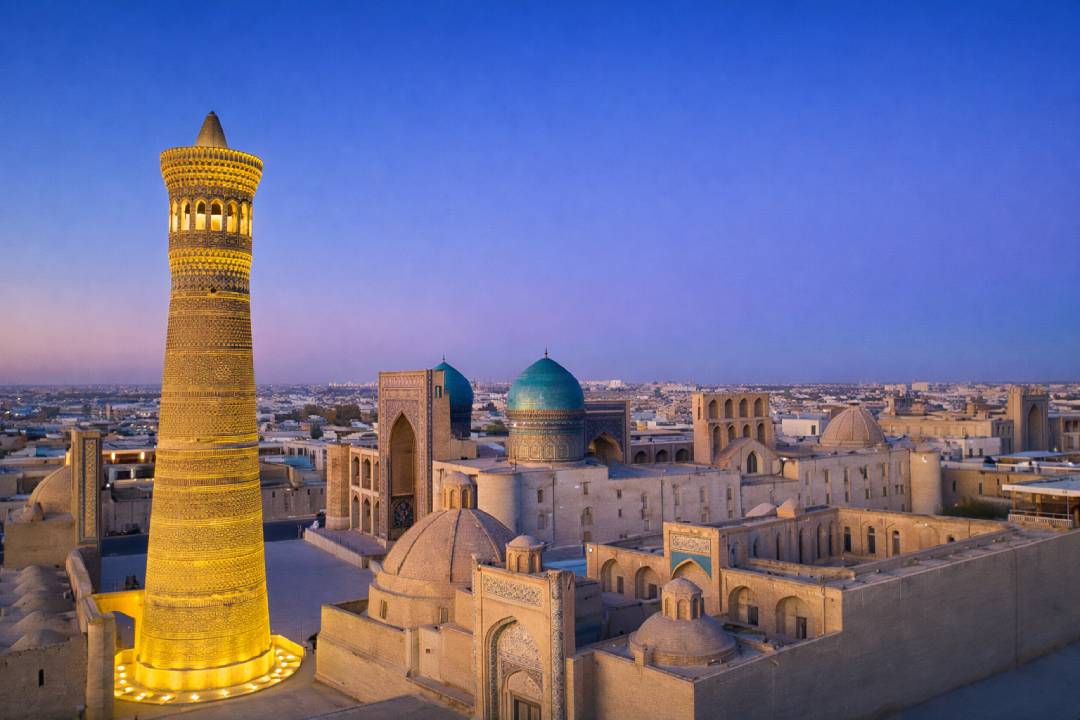
One of the most striking features of Bukhara is its preserved architecture. The Poi Kalyan Complex, with its towering minaret and grand mosque, dominates the skyline. Meanwhile, the Ark Fortress stands as a reminder of royal authority and political power. These landmarks are not mere ruins. Instead, they remain structurally impressive and historically layered. Furthermore, intricate tilework and geometric patterns reflect the artistic sophistication of Central Asian craftsmen. Unlike modern cities that constantly rebuild, Bukhara protects its architectural identity. Therefore, every street corner feels intentional and connected to the past. This continuity is what makes the city visually powerful.
A Living Museum Recognized by UNESCO
Bukhara’s historic center is listed as a UNESCO World Heritage Site. This recognition highlights its cultural importance on a global scale. However, what makes the city unique is that it is still alive and inhabited. Local families continue daily life within centuries-old structures. Markets operate near ancient mosques, and children play in courtyards once visited by scholars. As a result, the city does not feel frozen in time. Instead, it balances preservation with continuity. In my opinion, this living quality adds depth to the experience. Travelers are not observing history from a distance. They are walking within it.
Cultural Immersion Beyond the Landmarks
Although monuments attract attention, Bukhara’s true charm lies in its atmosphere. Traditional tea houses, artisan workshops, and quiet squares create an immersive cultural experience. For example, visitors can watch craftsmen weaving silk carpets or hammering copper by hand. These practices connect directly to Silk Road heritage. Moreover, local cuisine reflects Persian and Turkic influences, offering rich flavors and simple hospitality. Compared to larger tourist capitals, Bukhara feels more personal. Consequently, travelers often engage in conversations with locals. These small interactions often become the most memorable part of the journey.
Comparing Bukhara to Other Central Asian Cities
When compared to Samarkand, another famous Uzbek city, Bukhara feels more intimate. Samarkand impresses with monumental grandeur and bold colors. In contrast, Bukhara offers subtle elegance and historical depth. Both cities share Silk Road heritage. However, Bukhara’s compact layout allows visitors to explore on foot without rushing. Therefore, it suits slow travel enthusiasts. This distinction matters because modern travelers increasingly value meaningful experiences over checklist tourism. In that sense, Bukhara aligns perfectly with contemporary travel trends.
Why Modern Travelers Are Rediscovering Bukhara
In recent years, interest in lesser-known cultural destinations has grown. Bukhara fits this demand perfectly. It offers safety, accessibility, and authenticity without overwhelming crowds. Additionally, Uzbekistan has simplified visa procedures and invested in tourism infrastructure. As a result, more international visitors are exploring Central Asia. Social media also plays a role, as photographers highlight the city’s warm earth tones and blue domes. However, beyond aesthetics, Bukhara delivers intellectual and emotional depth. In my perspective, this balance explains why it resonates strongly with curious travelers.
The Enduring Legacy of a Timeless City
Bukhara, Uzbekistan A Silk Road City Steeped in History remains relevant because it represents continuity. It tells a story of trade, faith, scholarship, and resilience. While empires rose and fell, the city adapted without losing its identity. Consequently, Bukhara stands as a symbol of endurance. Visiting it is not merely about ticking off a destination. Instead, it is about understanding how civilizations connect across centuries. Ultimately, Bukhara reminds us that history is not distant. It lives in architecture, culture, and human memory. That enduring presence is what makes the city truly unforgettable.