Alhambra: The Majestic Islamic Fortress and Palace of Granada
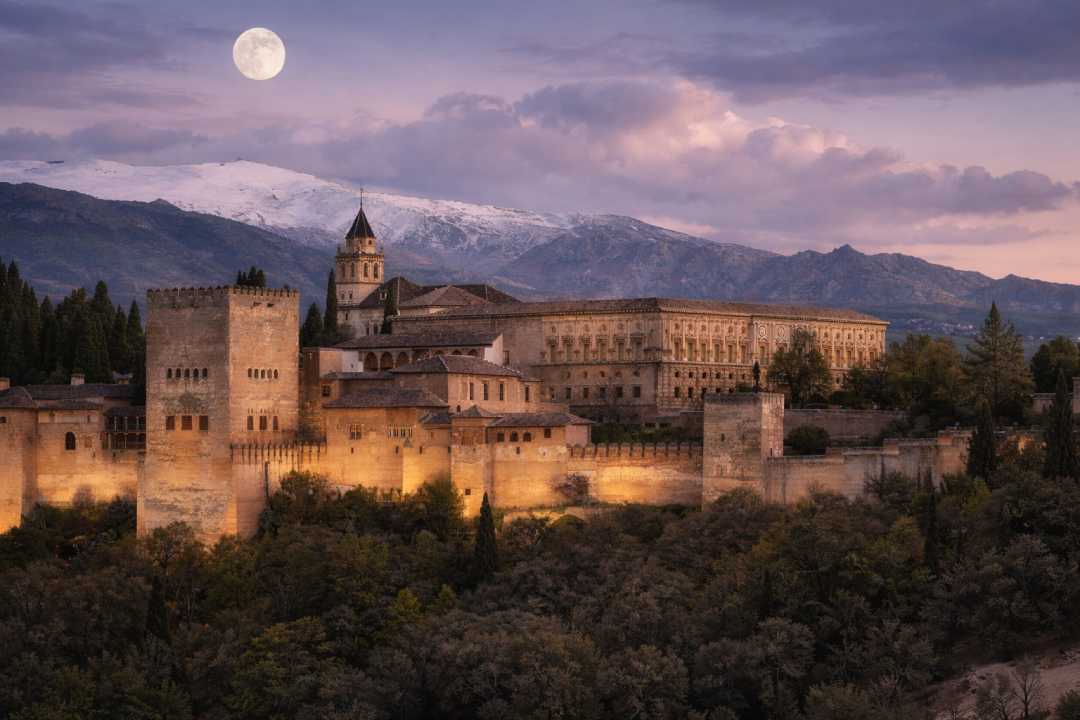
Trans to Find – Alhambra The Majestic Islamic Fortress and Palace of Granada stands as one of Spain’s most iconic landmarks. Perched on a hilltop in Granada, this ancient site has fascinated visitors for centuries with its stunning architecture and rich history. Built in the 13th century, Alhambra symbolizes the grandeur of Islamic architecture during the Nasrid dynasty. Originally a military fortress, it later became a magnificent palace, blending royal residence with defensive design.
The Historical Significance of Alhambra
Alhambra is not just a palace but also a symbol of the power and sophistication of the Nasrid dynasty. The complex began as a military fortress but evolved into a royal residence. Its construction was strategic, ensuring both defense and luxury. As the last Muslim kingdom in Spain, it holds a special place in history, tied to the Reconquista, the Christian reconquest of Spain.
“Read Also: Iran War Spreads Beyond the Middle East as Europe Steps In Carefully“
Architectural Beauty: A Blend of Cultures
The architectural beauty of Alhambra is a fusion of Islamic, Christian, and Jewish influences. Intricate arabesques, delicate stucco work, and colorful mosaics define the Islamic elements. Later additions reflect Renaissance styles, showcasing a fusion of eras. This blend of cultures gives Alhambra its timeless charm.
The Gardens of Alhambra: An Oasis of Peace
Alhambra’s gardens, especially the Generalife, represent the essence of Islamic garden design. Water flows freely through these peaceful spaces, while lush greenery creates a tranquil retreat for the royal family. These gardens were designed for both beauty and relaxation, offering visitors a glimpse into the serene atmosphere of the time.
The Famous Hall of the Abencerrages
The Hall of the Abencerrages is one of Alhambra’s most famous rooms. Legend says it connects to the tragic fate of the Abencerrages, a noble family executed by the Sultan. The room’s intricate dome, adorned with geometric patterns, showcases Islamic architectural mastery. Its connection to history and its beauty make it one of Alhambra’s most revered spaces.
The Symbolism of Alhambra
Beyond its architectural beauty, Alhambra represents the cultural achievements of Islamic Spain. It symbolizes protection and luxury, reflecting the power of the Nasrid rulers. Over the centuries, it has become a lasting symbol of Spain’s rich, multicultural past, where Islamic, Christian, and Jewish cultures coexisted.
The Role of Alhambra in the Reconquista
Alhambra played a pivotal role in the Reconquista, the Christian reconquest of Spain. It was the last Muslim stronghold in the Iberian Peninsula. When Christian forces captured Granada in 1492, it marked the end of Muslim rule in Spain. Despite this, much of Alhambra’s original design has remained intact, representing the enduring legacy of Islamic Spain.
Alhambra’s Influence on Art and Literature
Alhambra has inspired countless works of art, literature, and music. Writers like Washington Irving, who lived there in the 19th century, were enchanted by its beauty. His book Tales of the Alhambra introduced the palace to a wider audience. Over time, Alhambra has influenced painters, photographers, and musicians, who sought to capture its elegance and mystique.
Preservation and Tourism: A Global Treasure
Today, Alhambra is a UNESCO World Heritage site and attracts millions of visitors each year. Efforts to preserve its beauty continue, as it faces threats from weathering and over-tourism. The Spanish government, along with cultural organizations, ensures that Alhambra’s integrity remains intact for future generations. For tourists, it offers an unforgettable experience, offering insight into Spain’s Islamic history and architectural splendor.
A Timeless Masterpiece
Alhambra: The Majestic Islamic Fortress and Palace of Granada remains a masterpiece of architecture, history, and art. It symbolizes the power and elegance of the Nasrid dynasty, blending Islamic and Christian cultures. Its beauty, historical significance, and cultural importance make it one of Spain’s most revered landmarks. A visit to Alhambra is more than just a tour, it’s a journey through the vibrant history of Spain.