Vatnajökull Ice Caves Reveal Iceland’s Spectacular Frozen Wonderland
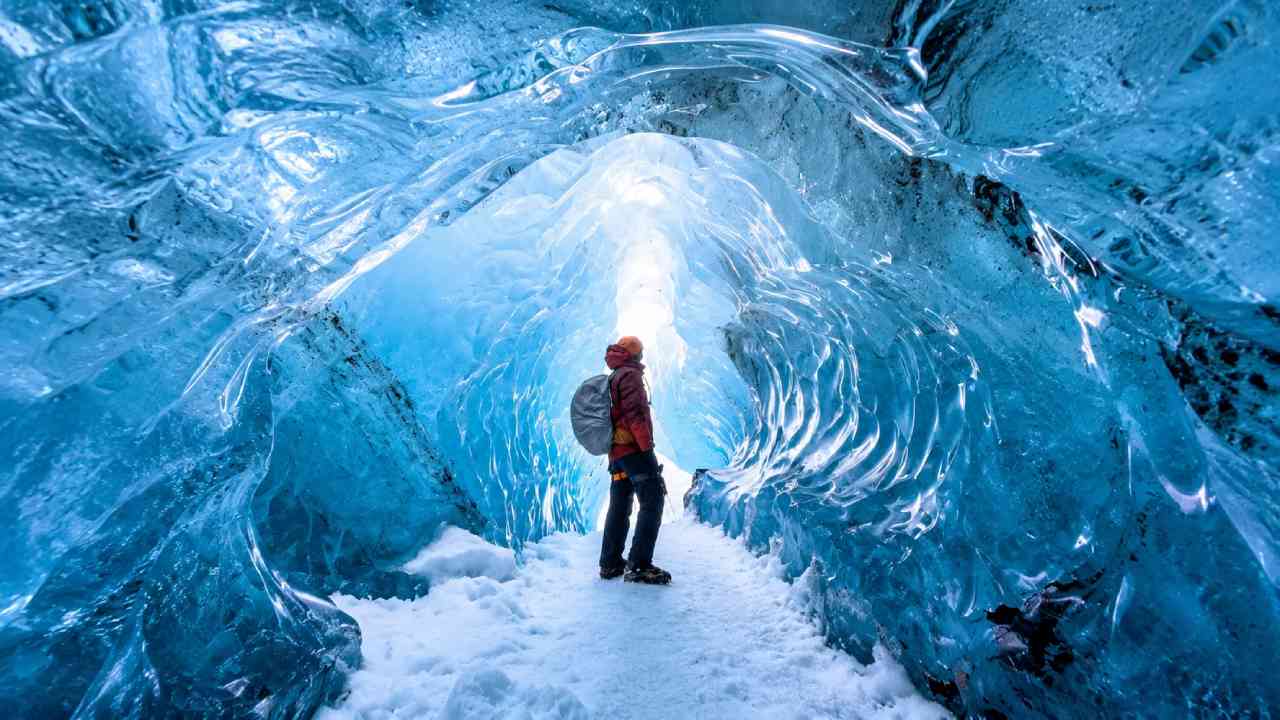
Trans to Find – In southeastern Iceland, Vatnajökull creates a landscape that can seem almost unreal. Beneath parts of this immense glacier, seasonal ice caves can form as meltwater carves passages through the ice. When conditions are right, visitors may enter a world of curved walls, frozen textures, and remarkable shades of blue. However, these caves are not permanent tourist structures. Their shape, accessibility, and safety can change as the glacier moves and temperatures shift. That changing nature makes each season different. Moreover, it adds a sense of discovery to the experience. Rather than simply viewing a glacier from a distance, travelers can encounter its constantly changing interior. For photographers and nature lovers, the contrast between dark volcanic landscapes and luminous ice creates a particularly memorable scene. Yet the experience also reveals something deeper: glaciers are active natural systems rather than motionless blocks of ice.
Why Vatnajökull Ice Can Appear So Intensely Blue
One of the most striking features around Vatnajökull is the blue appearance found in some sections of dense glacial ice. Snow gradually compresses over time, reducing air spaces and transforming into increasingly dense ice. As light travels through thick ice, red wavelengths are absorbed more readily, while more blue light remains visible. Therefore, sufficiently dense glacial ice can produce rich blue tones. Inside an ice cave, the effect can become especially dramatic because light enters through openings and passes through layers of ice. Some surfaces appear pale turquoise, while thicker sections may look much darker. Nevertheless, photographs can vary greatly depending on weather, camera settings, cave structure, and available daylight. Visitors should not expect every cave to resemble highly edited travel images. In reality, part of the beauty comes from subtle details such as trapped bubbles, rippled surfaces, sediment lines, and the changing glow of natural light.
Every Ice Cave Can Change From One Season to Another
Unlike conventional rock caves, glacial caves around Vatnajökull can be remarkably temporary. Meltwater may carve channels during warmer periods. Meanwhile, glacier movement can reshape, narrow, or close existing passages. As colder conditions return, guides may assess newly formed spaces that could potentially become suitable for visits. Consequently, a cave photographed during one season may look different later or may no longer be accessible. This constant transformation is central to the attraction. Travelers are not entering a carefully preserved underground chamber. Instead, they are seeing part of an active glacier at a particular moment in its evolution. For that reason, names used for individual ice caves can also vary between seasons and tour operators. The broader destination may remain the same, but the actual cave experience is shaped by current natural conditions. This unpredictability gives Vatnajökull a rare sense of discovery while also making professional safety assessment essential.
Read Also: NFL Week 2 Brings Early Tests, Big Questions and Fresh Expectations
Winter Creates a Distinctive Setting for Ice Cave Adventures
Ice cave tourism around Vatnajökull is strongly associated with the colder part of the year, although exact operating periods depend on conditions and the specific tour. Lower temperatures can make certain natural ice caves more suitable for guided exploration. However, weather in Iceland can change quickly. Heavy rain, warming temperatures, storms, or changing glacier conditions may affect access. Therefore, travelers should build some flexibility into their itinerary. A cancelled cave visit can be disappointing, but safety must come before a planned photograph or schedule. Furthermore, winter brings limited daylight compared with summer. This makes careful planning important for travelers combining an ice cave tour with other attractions in southeastern Iceland. The season also creates a dramatic atmosphere, with snow-covered terrain surrounding the glacier. For many visitors, that combination of cold air, enormous ice fields, and shifting winter light becomes as memorable as the cave itself.
Guided Exploration Is Essential in a Changing Glacier Environment
Exploring natural ice caves should not be treated like visiting an ordinary indoor attraction. Vatnajökull is a dynamic glacial environment where cracks, meltwater, unstable ice, and weather can create serious hazards. For that reason, travelers should use qualified local guides and follow their instructions carefully. Guides assess current conditions and determine whether a particular cave can be visited. Depending on the tour, visitors may also receive equipment such as helmets and traction devices. Appropriate clothing remains equally important. Warm layers, waterproof outerwear, gloves, and sturdy footwear can make the experience more comfortable. In addition, travelers should pay attention to the physical requirements listed by their chosen operator. Some tours involve relatively straightforward approaches, while others require longer glacier travel. Choosing an experience that matches personal ability can make the journey safer and more enjoyable. In this landscape, preparation is not an inconvenience; it is part of responsible travel.
Photography Reveals the Details Hidden Inside Vatnajökull
For travel photographers, Vatnajökull offers unusual combinations of texture, shape, and natural light. Inside a suitable ice cave, curved ceilings can frame the scene while translucent sections create a soft glow. Meanwhile, darker layers and trapped sediment add contrast to the blue ice. A wide-angle lens can help capture the scale of larger spaces. However, travelers should avoid focusing entirely on the camera. Conditions beneath a glacier require awareness of the surroundings and instructions from the guide. Furthermore, natural colors can look different from heavily processed images online. Keeping editing restrained can preserve the authentic character of the ice. Water droplets, rough surfaces, frozen bubbles, and narrow streaks of light can often tell a stronger visual story than extreme saturation. Ultimately, the most compelling photographs show not only beautiful blue ice but also the immense scale and constantly changing character of the glacier.
Vatnajökull Offers More Than Its Famous Ice Caves
Although ice caves attract enormous visual interest, Vatnajökull belongs to a much broader Icelandic landscape. The surrounding national park encompasses glaciers, mountains, volcanic terrain, rivers, and other dramatic natural features. Therefore, travelers can build a wider itinerary rather than treating an ice cave as an isolated attraction. Glacier walks, viewpoints, and nearby glacial landscapes can provide different perspectives on the region. This variety is particularly useful when weather changes a planned activity. Instead of viewing the trip as dependent on one cave, visitors can appreciate the entire environment that makes these formations possible. Moreover, seeing the glacier from outside adds context to the experience beneath the ice. The enormous surface above suddenly feels more dynamic after witnessing channels and textures within it. That relationship between surface and interior gives the destination unusual depth, making Vatnajökull compelling for travelers interested in geology, landscape photography, and nature-based adventures.
Responsible Travel Matters in Iceland’s Glacial Landscape
A journey to Vatnajökull also encourages travelers to think carefully about their impact. Glacial environments are sensitive, while Iceland’s popular natural destinations can receive significant visitor pressure. Staying on designated routes, following guide instructions, and avoiding damage to natural formations are simple but important practices. Visitors should also take all waste away and respect temporary closures. Furthermore, travelers should remember that access decisions are often based on changing environmental conditions rather than convenience. If guides close a cave or alter a route, there is usually a safety reason behind that decision. Responsible travel also means approaching the destination with realistic expectations. The goal should not be to reproduce one viral photograph exactly. Instead, visitors can appreciate the landscape they actually encounter. That perspective makes the experience more authentic and recognizes that Vatnajökull is a living natural environment rather than a fixed backdrop created for tourism.
Vatnajökull Turns a Journey Into an Otherworldly Experience
The lasting appeal of Vatnajökull comes from the feeling that the landscape is simultaneously beautiful and temporary. A tunnel may glow blue during one visit, while another season can reveal completely different formations. Light shifts across frozen walls, meltwater reshapes passages, and the glacier continues moving slowly through the landscape. As a result, travelers encounter a place that cannot be perfectly repeated. That impermanence gives the journey emotional weight. While many famous attractions remain largely recognizable for decades, a natural ice cave can transform within a much shorter period. For travelers seeking unusual landscapes, this creates a powerful reason to experience the destination with curiosity rather than expectations. The photographs may capture brilliant ice, but the strongest memory is often the sense of standing inside something enormous, natural, and constantly changing. In that way, Vatnajökull earns its reputation as one of Iceland’s most surreal frozen environments.