10 Dreamlike Destinations That Feel Almost Too Magical to Be Real
Trans to Find – Some destinations impress us with beautiful scenery, while others create the strange feeling that reality has briefly changed. Ancient cities hidden among mountains, pastel villages beside quiet waterways, and castles rising above the landscape can make travel feel almost cinematic. A ranking compiled by Slingo explored this idea by looking for destinations travelers frequently associate with the word “magical.” The analysis considered factors such as Google search interest, Instagram activity, and the share of Tripadvisor reviews that specifically described a place as magical. The resulting list stretches from South America to Europe, the Middle East, and New Zealand. However, the appeal goes deeper than social media numbers. Each destination offers a distinctive atmosphere shaped by architecture, history, nature, or storytelling. Together, they show why certain places remain vivid in our memories long after the journey ends.
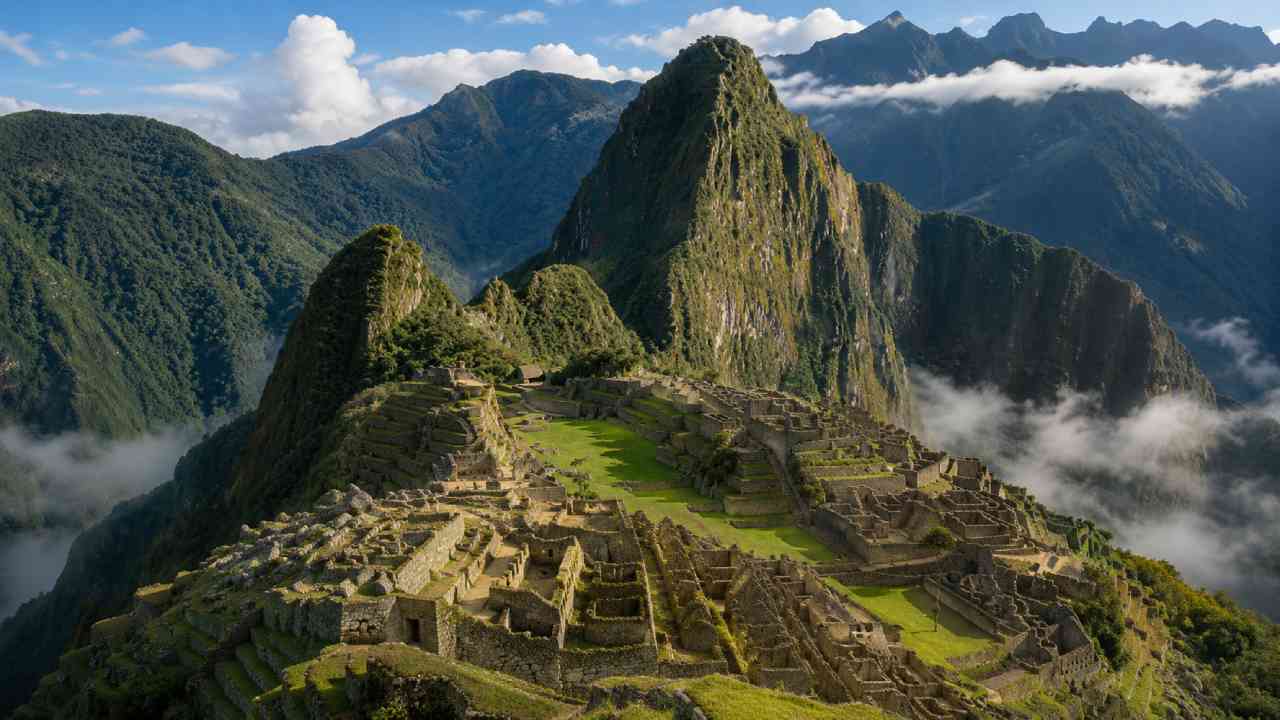
1. Machu Picchu, Peru — A Lost City Above the Clouds
Machu Picchu takes the top position, and its setting makes the result easy to understand. The 15th-century Inca site sits high in Peru’s Andes, surrounded by steep green peaks that often disappear behind drifting clouds. According to the ranking data, Machu Picchu attracts more than 19 million Google searches each year and appears in roughly 2.4 million Instagram posts. In addition, 4.2 percent of its Tripadvisor reviews reportedly include the word “magical.” Yet statistics only explain part of its attraction. Stone terraces, temples, stairways, and mountain scenery create an experience that feels separated from ordinary city life. Questions surrounding the site’s original functions also add to its mystery. For many travelers, reaching Machu Picchu is not simply another sightseeing stop. The journey, altitude, landscape, and surviving Inca architecture combine to create an experience that can feel almost unreal.
2. Petra, Jordan — An Ancient City Carved Into Stone
Petra offers a completely different kind of wonder. Instead of emerging from green mountains, this ancient Nabataean city appears among dramatic sandstone cliffs in southern Jordan. Visitors often approach through the Siq, a narrow canyon that gradually reveals the famous Treasury facade. That entrance alone creates one of travel’s most memorable moments. Petra ranked second after recording about 9.3 million annual Google searches and 1.8 million Instagram posts. Around 3.8 percent of Tripadvisor reviews in the study also described the destination as magical. However, Petra extends far beyond the Treasury. Travelers can explore tombs, temples, pathways, and the imposing Monastery. The Nabataeans also developed sophisticated water-management systems that supported life in an arid landscape. Consequently, Petra combines visual drama with remarkable engineering and history. Its scale becomes clearer only when visitors begin walking through the wider archaeological landscape.
Read Also: Trump’s Secret Air Force One Transfer Sparks Security and Transparency Questions
3. Stonehenge, England — Mystery Written in Stone
Stonehenge proves that a destination does not need elaborate architecture to inspire fascination. The prehistoric stone circle on Salisbury Plain has encouraged questions for generations. Why did people transport enormous stones across considerable distances? How did they organize the construction? What ceremonies or beliefs surrounded the monument? Archaeology has provided important insights, yet Stonehenge continues to hold an aura of mystery. The ranking recorded around 12 million annual Google searches and more than 924,000 Instagram posts related to the site. Meanwhile, 3.6 percent of Tripadvisor reviews reportedly used the word “magical.” Its appeal comes partly from simplicity. Visitors encounter a circle of ancient stones standing against an open landscape, but thousands of years of human history sit behind that view. Sunrise and sunset can make the setting even more atmospheric, especially when shifting light changes the character of the stones.
4. Sintra, Portugal — Palaces Straight From a Storybook
Sintra feels designed for travelers who grew up imagining hidden palaces and enchanted forests. Located within easy reach of Lisbon, the Portuguese town combines colorful architecture, wooded hills, gardens, estates, and romantic-era landmarks. Pena Palace provides the most recognizable image, with bright colors and dramatic towers overlooking the surrounding landscape. However, Sintra rewards slower exploration. Quinta da Regaleira adds mysterious gardens, underground passages, and the famous Initiation Well, while the Moorish Castle introduces another layer of history. Slingo’s analysis also identified Sintra as particularly picturesque, supported by roughly 2.5 million Instagram posts. Unlike destinations whose magic comes primarily from untouched nature, Sintra creates its atmosphere through the interaction of architecture and landscape. Mist drifting through the hills can completely transform the mood. As a result, even a short walk between landmarks can feel like moving through different chapters of a fantasy story.
5. Hallstatt, Austria — A Lakeside Village With Fairytale Appeal
Hallstatt has become one of Europe’s most recognizable village scenes. Traditional houses sit between a mountain slope and the calm waters of Lake Hallstatt, creating a compact landscape that appears almost deliberately arranged for photographs. Yet the village has more depth than its famous viewpoint suggests. Hallstatt belongs to a region with a long history connected to salt mining, and that heritage remains central to its identity. The surrounding mountains and lake also change dramatically with the seasons. Snow creates a quiet winter atmosphere, while warmer months bring greener slopes and reflections across the water. Its popularity has also created challenges, including heavy visitor numbers in a very small community. Therefore, thoughtful travel matters here. Staying longer, exploring beyond the main photo spots, and respecting residential areas can provide a more meaningful experience. Hallstatt’s real charm becomes easier to appreciate when travelers see it as a living village rather than merely a social media backdrop.
6. Pamukkale, Türkiye — White Terraces Shaped by Water
From a distance, Pamukkale can resemble a snowy hillside despite Türkiye’s warm climate. The unusual appearance comes from mineral-rich thermal waters flowing across brilliant white travertine terraces. Over time, calcium deposits helped create the layered pools and formations that give the landscape its distinctive character. The name Pamukkale translates to “cotton castle,” an appropriate description for its soft-looking white surfaces. However, the destination also combines natural beauty with ancient history. Nearby Hierapolis contains the remains of a Greco-Roman spa city, allowing travelers to experience archaeological ruins and geological formations during the same visit. That combination separates Pamukkale from many scenic destinations. The most memorable experience often comes from contrast: warm blue water, pale terraces, ancient stone, and expansive views appear together within one landscape. Few places demonstrate so clearly how nature can create scenery that looks almost digitally designed.
7. Lauterbrunnen, Switzerland — A Valley Framed by Waterfalls
Lauterbrunnen delivers a type of beauty that feels closer to fantasy landscape art than everyday geography. The Swiss valley sits between dramatic rock walls, alpine meadows, traditional houses, and numerous waterfalls. Staubbach Falls provides one of its defining views as water drops from a high cliff near the village. However, the broader valley creates the real experience. Walking paths connect small settlements and provide views that continually shift between mountains, pastureland, waterfalls, and distant snow-covered peaks. Unlike destinations dominated by one famous monument, Lauterbrunnen works as a complete landscape. Travelers do not necessarily need to chase a single viewpoint. Simply moving through the valley can become the main attraction. Cable cars and rail connections also provide access to surrounding mountain areas. For visitors searching for quiet scenery rather than urban entertainment, Lauterbrunnen offers an environment where slowing down becomes part of the journey.
8. Colmar, France — Colorful Streets With Old-World Charm
Colmar brings the magical feeling into an urban setting. Located in France’s Alsace region, the town is known for colorful half-timbered houses, narrow streets, canals, and carefully preserved historic architecture. The area commonly called Little Venice has become especially popular with photographers because buildings line the waterways in a mix of pastel shades. However, Colmar changes character throughout the day. Early mornings can feel peaceful before busy streets fill with visitors, while evening lights give the historic center a warmer atmosphere. Seasonal decorations can make the town appear even more theatrical, particularly around the winter holidays. Colmar’s charm does not depend on enormous monuments or dramatic mountains. Instead, small details create the experience: flower boxes, wooden facades, bridges, signs, cafés, and winding streets. This human scale makes the town easy to explore slowly, which suits travelers who enjoy discovering beauty through everyday surroundings rather than grand landmarks.
9. Mont-Saint-Michel, France — An Island That Changes With the Tide
Mont-Saint-Michel looks like a fantasy fortress rising from the sea. The medieval abbey and village stand on a tidal island off the Normandy coast, creating a silhouette that has become one of France’s most recognizable views. What makes the destination especially fascinating is the surrounding environment. Tides dramatically change the landscape, sometimes surrounding the island with water and at other times revealing wide stretches of sand. Inside, narrow lanes climb toward the abbey at the summit. Stone walls, stairways, and medieval architecture gradually replace the expansive coastal views below. The destination therefore offers two experiences at once: an impressive historic monument and a landscape constantly transformed by nature. Timing can significantly influence a visit because light, weather, crowds, and tidal conditions alter the atmosphere. When those elements align, Mont-Saint-Michel can genuinely appear less like an ordinary travel destination and more like a setting imagined for a historical fantasy film.
10. Hobbiton, New Zealand — Fantasy Brought Into the Real World
Hobbiton differs from every other destination on this list because its magical character began with fiction. The movie set in Matamata, New Zealand, became famous through The Lord of the Rings and The Hobbit films. Rolling green hills, circular Hobbit-hole doors, gardens, pathways, and familiar locations allow visitors to physically enter a world they previously knew from the screen. Yet the surrounding landscape plays an equally important role. The lush farmland helps the set feel naturally integrated rather than detached from its environment. For film fans, that connection can make the visit particularly emotional. However, even travelers who are less familiar with Middle-earth can appreciate the craftsmanship and scenery. Hobbiton demonstrates a different form of destination magic. Machu Picchu and Petra carry the mystery of ancient civilizations, while Lauterbrunnen and Pamukkale rely heavily on nature. Hobbiton shows how storytelling and design can transform a real landscape into an enduring cultural destination.