Visit Al Naslaa Rock and See Saudi Arabia’s Incredible Desert Wonder
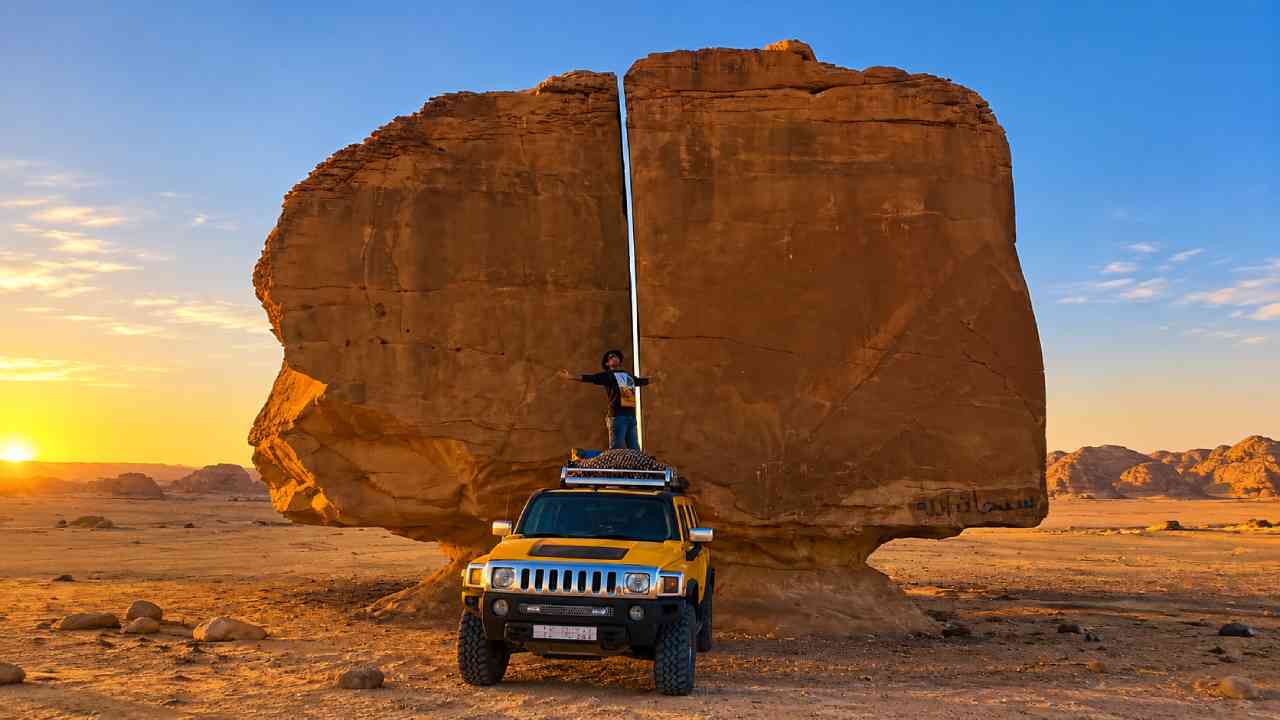
Trans to Find – Al Naslaa is one of those places that can make travelers question what they are seeing. Located near Tayma in northwestern Saudi Arabia, this remarkable sandstone formation appears to have been divided into two massive pieces. A narrow vertical gap runs between them with surprising precision. Moreover, each section rests on a relatively slender base, which makes the formation even more unusual. Against the open desert, the rock creates a scene that feels almost unreal. However, its appeal goes beyond a striking photograph. A journey here introduces visitors to the quiet landscapes surrounding Tayma and a region shaped by geology and human history. For travelers who prefer unusual natural landmarks over crowded attractions, Al Naslaa offers a memorable reason to explore another side of Saudi Arabia.
The Perfect Split Makes the Rock Immediately Memorable
The first thing most visitors notice is the remarkable gap through the center of Al Naslaa. From certain viewpoints, the separation looks so clean that it can resemble a cut made by a giant blade. Naturally, this appearance has inspired plenty of speculation. Yet unusual shapes can develop through geological processes over long periods. Natural fractures can form within sandstone, while weathering gradually alters exposed surfaces. Wind, temperature changes, and erosion can also influence the final appearance. Therefore, travelers do not need a mysterious explanation to appreciate the formation. In fact, understanding how slowly desert landscapes evolve makes the sight even more impressive. Standing near the formation also offers something photographs cannot fully communicate: scale. The surrounding open terrain emphasizes how isolated and distinctive the two pieces appear.
Tayma Adds History to the Journey
A visit to Al Naslaa becomes more meaningful when travelers also explore Tayma. This historic oasis has long occupied an important position in northwestern Arabia. Its water resources helped support settlement and movement through an otherwise challenging desert environment. Consequently, the wider area offers more than dramatic scenery. Archaeological remains and ancient inscriptions reflect different chapters of human activity in the region. Travelers interested in culture can therefore combine natural exploration with a deeper look at Arabia’s past. This combination makes Tayma especially appealing for a slower itinerary. Instead of arriving only for a photograph, visitors can spend time understanding the landscape around the famous rock. In my view, that context turns Al Naslaa from an unusual geological curiosity into part of a much richer travel experience.
Read Also: India Warns Residents Against Eating Strange Fish After Nepal Floods
Ancient Rock Art Adds Another Layer of Interest
Look closely at Al Naslaa and the landscape reveals another fascinating detail: rock carvings. Petroglyphs appear on its surfaces, connecting the formation with people who moved through this region long before modern tourism. Some carvings depict recognizable figures and animals, while other markings invite closer observation. Therefore, visitors should treat the formation as more than a dramatic backdrop for photographs. These traces give the site cultural value and reinforce the importance of responsible travel. Avoid touching, scratching, or adding markings to any rock surface. Even a small act of damage can permanently alter material that has survived for generations. Moreover, respectful behavior helps preserve the experience for future visitors. The combination of geology and ancient human expression gives Al Naslaa a character that many conventional desert viewpoints simply cannot match.
The Desert Setting Makes the Experience More Dramatic
Al Naslaa would already be fascinating on its own, but its desert setting increases the visual impact. Open ground surrounds the formation, while earthy sandstone tones blend into a broad horizon. As a result, there are relatively few visual distractions competing with the rock. The landscape also changes character as sunlight shifts throughout the day. Strong midday light can emphasize texture, while lower sunlight can create longer shadows and warmer tones. Consequently, photographers may find early or later daylight especially rewarding. However, travelers should remember that desert conditions can be demanding. Heat, dry air, and exposed terrain require sensible preparation. Carrying enough water, checking local conditions, and planning transportation are more important than chasing the perfect photograph. The emptiness that makes the landscape beautiful also means visitors should approach the journey carefully.
Plan the Journey Around Tayma Rather Than Rushing
Travelers interested in Al Naslaa should treat Tayma as the practical center of the trip. The town lies in Tabuk Province and provides a useful base for exploring the surrounding landscape. Because remote desert travel differs from visiting an urban attraction, planning ahead can make the experience smoother. First, confirm current road access and local visitor conditions before leaving. Next, consider arranging suitable transportation, especially if your itinerary reaches less-developed areas. A local guide can also add valuable context about the landscape and nearby heritage sites. Meanwhile, avoid building an overly tight schedule. Desert journeys often become more enjoyable when travelers leave time for unexpected stops and changing conditions. Al Naslaa may be the headline attraction, but the wider Tayma landscape deserves attention too. The journey should feel like exploration rather than a quick photo stop.
Cooler Months Can Make Desert Exploration More Comfortable
Timing matters when planning a desert trip. Saudi Arabia can experience intense heat, particularly during warmer periods and around the middle of the day. Therefore, travelers who prefer walking and outdoor exploration may find cooler months more comfortable. Even then, desert temperatures can change noticeably between daytime and evening. Layered clothing can help visitors adapt. Sun protection is equally important. A hat, sunscreen, suitable footwear, and plenty of drinking water should be basic parts of the travel kit. Moreover, checking weather forecasts before departure can help avoid unpleasant surprises such as strong winds or extreme temperatures. Travelers should also confirm local access information because conditions and visitor arrangements can change. Good preparation does not reduce the sense of adventure. Instead, it allows visitors to focus more fully on the landscape once they arrive.
Al Naslaa Is a Dream Setting for Travel Photography
Few landmarks provide such a simple yet striking composition. Two enormous pieces of sandstone, a narrow gap, and an open desert background are enough to create memorable images. However, the best photographs do not always require standing directly in front of the split. Moving around the formation can reveal different relationships between the rocks and the horizon. Likewise, including a person at a respectful distance can help communicate scale. Softer sunlight may also reveal surface textures that disappear under harsh midday brightness. Still, responsible photography should come first. Visitors should avoid climbing onto fragile surfaces or damaging rock art for a dramatic shot. A compelling travel image should preserve the destination rather than disturb it. With patience and thoughtful framing, Al Naslaa provides plenty of visual drama without requiring artificial effects.
Pair Al Naslaa With a Wider Northwestern Saudi Arabia Adventure
One reason to consider Al Naslaa is its potential role within a broader journey through northwestern Saudi Arabia. The region contains desert landscapes, oasis settlements, archaeological areas, and striking geological formations. Therefore, travelers can build an itinerary around several experiences rather than making a long journey for one landmark. Tayma itself deserves time, especially for visitors interested in history. Depending on the route, a longer trip may also connect with other destinations across Tabuk Province and northwestern Arabia. However, distances can be substantial. Checking drive times, accommodation, fuel options, and current access rules before departure is essential. A carefully paced itinerary will usually feel more rewarding than trying to cover too much ground. Al Naslaa works particularly well as one memorable chapter within a larger desert journey.
Responsible Travel Helps Protect This Unusual Landmark
Remote natural landmarks can appear indestructible, but they still require protection. Visitors should avoid carving names, leaving waste, disturbing archaeological material, or climbing where doing so could cause damage. Instead, photographs provide a harmless way to take memories home. Travelers should also follow any barriers, signs, or instructions that apply during their visit. Furthermore, using established routes helps reduce unnecessary disturbance to the surrounding landscape. These habits may seem simple, yet they become increasingly important as unusual destinations gain attention online. Viral photographs can quickly bring more visitors to places that were once relatively quiet. Therefore, responsible behavior should grow alongside tourism. Preserving Al Naslaa means allowing future travelers to encounter the same extraordinary formation without finding new marks left behind by previous visitors.
Al Naslaa Belongs on an Unusual Travel Bucket List
Some destinations impress through scale, while others rely on color or dramatic architecture. Al Naslaa succeeds because one simple geological feature creates an unforgettable visual puzzle. The narrow split immediately attracts attention, yet the surrounding desert, historic setting, and rock art provide reasons to stay curious. Moreover, the journey offers a different perspective on Saudi Arabia beyond its major cities. Travelers who enjoy geology, photography, history, or remote landscapes may find the experience particularly rewarding. Still, preparation remains essential because desert travel requires more planning than an ordinary city excursion. Check current access, organize transportation, carry appropriate supplies, and respect the site once you arrive. With those basics covered, Al Naslaa can become far more than another photograph on a travel feed. It can become one of the most distinctive stops on a Saudi Arabian journey.