Kawachi Wisteria Garden Feels Like a Dreamy Purple Wonderland
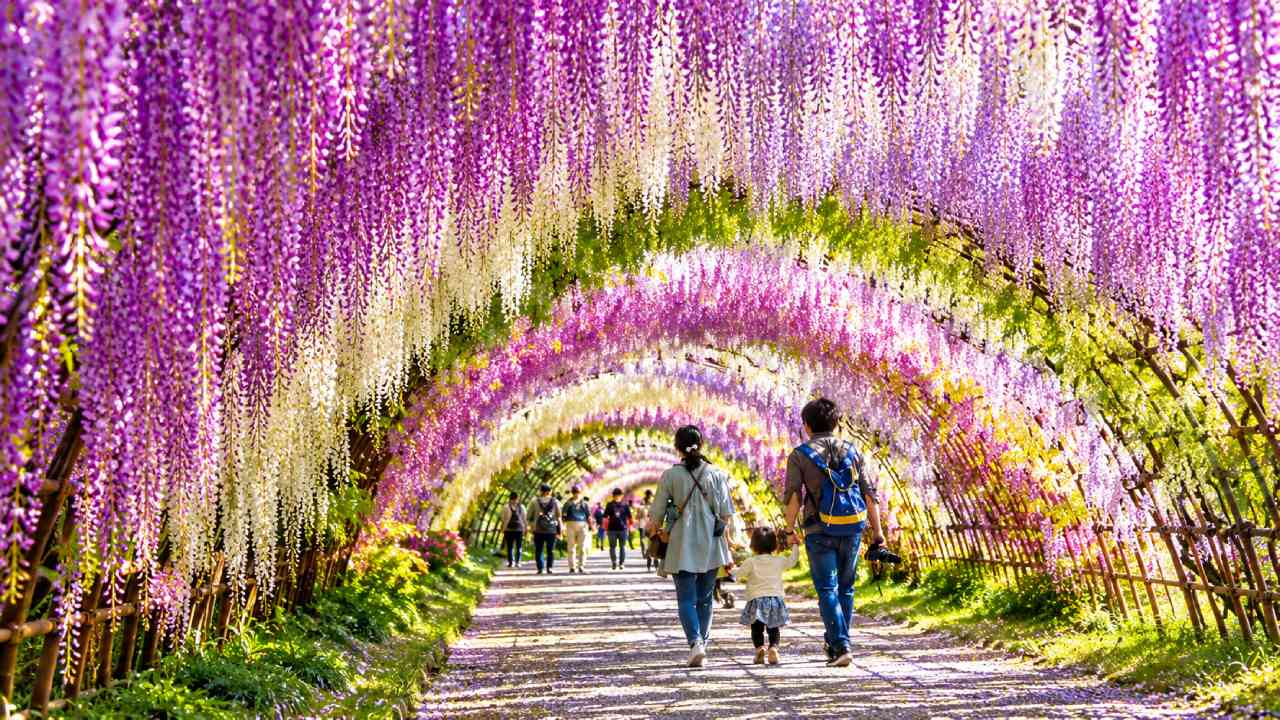
Trans to Find – Some places impress travelers the moment they arrive. However, Kawachi Wisteria creates a feeling that is harder to describe. Located in Kitakyushu, Fukuoka, this enchanting Japanese garden becomes especially beautiful when its famous flowers reach full bloom. Long clusters of wisteria hang overhead and create a soft canopy of purple, pink, and white. As visitors walk beneath the flowers, ordinary pathways suddenly feel like passages into another world. Sunlight filters through the petals and adds changing shades throughout the day. Moreover, the gentle movement of the blossoms makes every corner feel alive. The experience is not only about taking beautiful photographs. It is also about slowing down and noticing small details. For travelers searching for an unusual spring destination in Japan, this garden offers a peaceful escape that feels wonderfully removed from everyday life.
Read Also: Why Linux Can Give Old Laptops a Second Life
The Famous Flower Tunnels Create an Unforgettable Journey
The wisteria tunnels are among the garden’s most recognizable attractions. Instead of viewing flowers from a distance, visitors can walk directly beneath thousands of hanging blossoms. Therefore, the experience feels immersive from the first few steps. Layers of flowers form a colorful ceiling while green leaves provide natural contrast. From certain angles, the pathway seems to disappear beneath an endless wave of blooms. This visual effect explains why images of Kawachi Wisteria often appear almost unreal. Yet photographs reveal only part of the experience. Visitors can also notice subtle changes in light, texture, and color as they continue walking. Meanwhile, different varieties create variations in the shape and length of the flower clusters. The tunnel becomes more than a popular photo location. Instead, it works as a carefully framed journey through seasonal nature, where every few meters can reveal a completely different composition.
Spring Transforms the Garden Into a Purple Wonderland
Spring brings the garden’s most anticipated transformation. Wisteria generally blooms around late April and early May, although exact timing depends on yearly weather conditions. During this period, the landscape fills with delicate colors and dense hanging flowers. Purple may dominate many photographs, but visitors can also discover white, pink, and other subtle tones. As a result, the garden feels richer than a single-color attraction. The changing sunlight adds another layer to the scenery. Morning light can produce a calm atmosphere, while brighter daylight highlights individual petals and leaves. Furthermore, a gentle breeze causes the long flower clusters to move naturally overhead. That movement gives the garden an almost cinematic quality. Travelers planning a spring trip should remember that blooming conditions can change quickly. Checking current seasonal information before visiting can therefore make a significant difference, especially for anyone hoping to experience Kawachi Wisteria near its visual peak.
More Than a Beautiful Background for Travel Photos
It is easy to understand why photographers are attracted to this garden. Almost every section offers natural frames, layered colors, and unusual perspectives. Nevertheless, focusing only on photography can mean missing part of its appeal. Kawachi Wisteria encourages visitors to experience the surroundings at a slower pace. Looking upward reveals layers of flowers that are easy to overlook through a camera screen. Similarly, stepping away from the busiest viewpoints can reveal quieter details along the pathways. The changing shadows beneath the canopy are especially beautiful when sunlight passes through the blossoms. In addition, different viewing angles can make the same section look completely new. This balance between visual drama and peaceful observation gives the garden its distinctive character. Rather than feeling like a simple backdrop created for social media, it offers a genuine encounter with Japan’s seasonal landscape and the temporary beauty that makes spring travel so memorable.
Why the Garden Can Look Almost Too Perfect to Be Real
Travel photographs sometimes make destinations appear more dramatic than they really are. In this case, however, the unusual appearance comes largely from nature itself. Dense clusters of wisteria hang closely together, creating layers that resemble painted clouds of color. Meanwhile, curved pathways and floral tunnels add depth to the scene. When sunlight enters between the flowers, brighter sections appear beside deep purple shadows. Consequently, photographs can look almost digitally created. The effect becomes even stronger when the blossoms are near peak condition. Still, the garden’s appeal is not based on perfection alone. Fallen petals, moving branches, and changing light remind visitors that this landscape is temporary. That natural imperfection makes Kawachi Wisteria more interesting. It is beautiful precisely because the scene cannot remain unchanged. For many travelers, knowing that the flowers appear for a limited season makes walking beneath them feel even more special.
Planning the Right Time Makes a Major Difference
Timing plays an important role when visiting a seasonal flower destination. Wisteria does not follow an identical calendar every year because temperature and weather influence the blooming cycle. Therefore, travelers should avoid assuming that one particular date will always provide perfect conditions. Instead, checking the garden’s latest visitor information before traveling is a sensible approach. The popular flowering period often overlaps with Japan’s busy Golden Week season. Consequently, visitor numbers can rise significantly around the most attractive bloom dates. Planning transportation and admission arrangements early can reduce unnecessary stress. Comfortable footwear is also useful because visitors may spend considerable time exploring and waiting at popular viewpoints. Additionally, travelers should allow enough time to enjoy the garden without rushing. Kawachi Wisteria rewards patience. A slower visit makes it easier to notice how different sections change with the light and how individual varieties contribute their own colors and textures.
Read Also: Absolutely in Seoul: Karina and Winter of aespa Bring Seoul’s Magic to the World
Kitakyushu Adds More Depth to the Travel Experience
A journey to the garden can also become an opportunity to discover more of Kitakyushu and the wider Fukuoka area. This makes the destination particularly interesting for travelers who want experiences beyond Japan’s most familiar routes. Instead of treating Kawachi Wisteria as an isolated photo stop, visitors can include it within a broader regional itinerary. The surrounding area provides a different rhythm from destinations such as central Tokyo or Osaka. Therefore, the trip can offer a refreshing contrast for travelers exploring several parts of Japan. Regional food, urban scenery, and nearby attractions can add variety before or after a garden visit. This approach also makes the journey feel more complete. After spending time beneath dramatic flower tunnels, exploring another side of the region provides useful context. Ultimately, memorable travel often comes from combining a famous attraction with smaller discoveries that were not originally part of the plan.
A Seasonal Experience That Rewards Slow Travel
Modern travel can sometimes become a race between landmarks. Yet a flower garden offers a different kind of experience because there is little reason to hurry. Visitors cannot control the blossoms, sunlight, or weather. Instead, they have to experience the landscape as it appears that day. That unpredictability is part of the charm of Kawachi Wisteria. One visitor may encounter brilliant sunshine filtering through purple flowers. Another may see softer colors beneath cloudy skies. Both experiences can be memorable in different ways. Moreover, slowing down allows travelers to appreciate details beyond the famous tunnels. Individual petals, twisting vines, subtle fragrances, and shifting shadows can become part of the memory. In that sense, the garden represents something valuable about travel itself. Beautiful destinations do not always need constant activity. Sometimes, walking slowly beneath a ceiling of flowers can create a stronger memory than checking several attractions off a crowded itinerary.
Kawachi Wisteria Captures the Fleeting Beauty of Japan’s Spring
Perhaps the garden’s greatest appeal comes from its temporary nature. The flowers bloom, reach their peak, and eventually fade as the season continues. Therefore, every visit captures only one brief stage of a constantly changing landscape. This idea connects naturally with Japan’s deep appreciation for seasonal beauty. Visitors arrive knowing the scenery will not remain exactly the same for long. As a result, ordinary moments can feel surprisingly meaningful. A breeze moving through hanging blossoms or sunlight appearing between clouds may become the highlight of the visit. Kawachi Wisteria combines these small moments with extraordinary visual scenery. Its tunnels may look like something created for a fantasy film, yet their beauty comes from real flowers and natural seasonal change. For travelers seeking a destination that feels peaceful, surreal, and distinctly Japanese, this remarkable garden offers an experience that can remain vivid long after spring has ended.