Devil’s Bridge: Germany’s Magical Stone Bridge That Looks Unreal
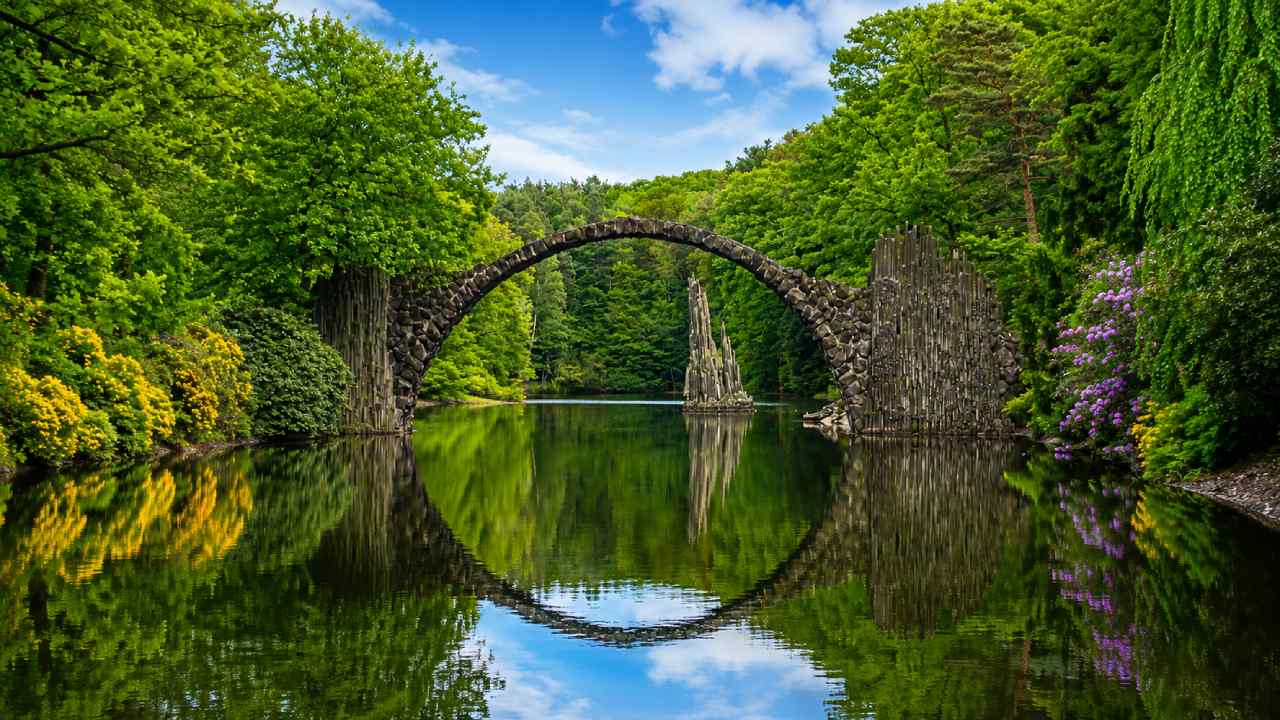
Trans to Find – Devil’s Bridge is one of Germany’s most extraordinary landmarks, attracting travelers who appreciate both natural beauty and remarkable architecture. Located in Kromlau Park, this elegant stone bridge appears almost unreal because its graceful arch creates a perfect circle when reflected on the calm surface of the lake below. Consequently, thousands of photographers and nature lovers visit every year to witness this breathtaking illusion. Unlike many famous bridges built for heavy transportation, Devil’s Bridge was designed to inspire admiration rather than movement. Its carefully crafted shape blends seamlessly with the surrounding landscape, creating a scene that resembles a fantasy painting. As a result, many visitors describe their first impression as unforgettable, especially during sunrise or autumn when the scenery becomes even more dramatic.
The Fascinating History Behind Rakotzbrücke
Although people commonly call it Devil’s Bridge, the structure is officially known as Rakotzbrücke. It was constructed during the nineteenth century as part of an ambitious landscape project in Kromlau Park. At that time, designers wanted to create an environment that celebrated the harmony between architecture and nature. Therefore, every stone was carefully selected and positioned to achieve visual perfection. Rather than focusing on practicality alone, the builders emphasized artistic balance and symmetry. Over the decades, the bridge became one of Germany’s most recognizable historical landmarks. Today, it continues to preserve the vision of its original creators while welcoming visitors from around the world who admire its timeless elegance.
The Optical Illusion That Amazes the World
One of the most remarkable features of Devil’s Bridge is its extraordinary reflection. Whenever the lake remains perfectly still, the bridge’s arch mirrors itself to form a complete circle. Consequently, photographs often appear digitally edited even though the effect is entirely natural. This stunning illusion depends on calm weather, clean water, and the precise geometry of the bridge itself. Furthermore, changing light conditions throughout the day create different visual experiences. Early morning frequently offers the clearest reflection because the wind is usually gentle. This unique combination of engineering and nature explains why the bridge has become a favorite subject for landscape photographers worldwide.
Read Also: Palmarola Island: Italy’s Hidden Volcanic Paradise Where Time Slows and Nature Takes Over
Surrounded by the Beauty of Kromlau Park
Devil’s Bridge sits within the peaceful surroundings of Kromlau Park, one of Germany’s most charming landscape gardens. Visitors can explore walking paths, mature trees, colorful flowers, and tranquil ponds while enjoying a relaxing atmosphere. Each season transforms the scenery in a unique way. Spring introduces vibrant blossoms, while summer fills the park with rich greenery. During autumn, golden and crimson leaves frame the bridge beautifully. Meanwhile, winter creates a quiet landscape that feels almost magical. Because every season offers a different perspective, many photographers return several times throughout the year to capture fresh compositions.
Why Visitors Cannot Walk Across the Bridge
Many first-time visitors are surprised to learn that walking across Devil’s Bridge is no longer permitted. Preservation efforts have made protecting the historic structure a top priority. Over time, constant foot traffic could weaken the bridge and damage its original stonework. Therefore, authorities decided to restrict access to ensure future generations can continue enjoying this remarkable landmark. Fortunately, visitors can still admire the bridge from carefully positioned viewpoints around the lake. In fact, these viewing areas often provide even better perspectives for photography because they showcase the famous circular reflection more clearly.
A Dream Destination for Travel Photographers
Photography enthusiasts frequently consider Devil’s Bridge one of Europe’s most rewarding landscape locations. Every element contributes to a visually balanced composition, including the stone arch, surrounding trees, reflective water, and changing seasonal colors. Moreover, soft natural light enhances textures without overwhelming the scene. Many professionals recommend visiting shortly after sunrise because the lake is typically calmer and fewer tourists are present. Patience also plays an important role. Waiting for completely still water can transform an ordinary photograph into an extraordinary masterpiece. Consequently, countless award-winning travel images have featured this remarkable destination.
Legends Add Mystery to an Already Magical Place
Like many ancient European stone bridges, Devil’s Bridge is surrounded by fascinating legends. According to traditional folklore, bridges with impossible designs were believed to have been built with supernatural assistance. Although these stories remain fictional, they continue adding mystery and charm to the landmark. Such legends also reflect how earlier generations explained extraordinary architecture before modern engineering became widely understood. Today, visitors appreciate both the imaginative folklore and the genuine craftsmanship that brought Rakotzbrücke to life. This blend of history and mythology makes the destination even more memorable.
Why Devil’s Bridge Remains One of Germany’s Most Iconic Attractions
Devil’s Bridge continues inspiring travelers because it perfectly combines artistic design, natural beauty, and historical significance. Unlike many modern attractions, it does not rely on technology or entertainment to impress visitors. Instead, its appeal comes from timeless craftsmanship and the quiet elegance of its surroundings. Every reflection on the lake reminds visitors that nature often enhances human creativity in extraordinary ways. Whether viewed in person or through photographs, the bridge encourages people to slow down and appreciate details that are easy to overlook. Ultimately, Devil’s Bridge proves that some of the world’s most magical places are not created by fantasy, but by the remarkable partnership between architecture and nature.